Yue Ware Celadon: Subtle Elegance in Green
|
Yue ware is a highly regarded form of celadon produced in the Zhejiang province during the Tang Dynasty. These pieces are characterized by their subtle green glazes, their elegant forms, and their fine, smooth bodies. Yue ware celadon is a more understated style than the sancai pieces. 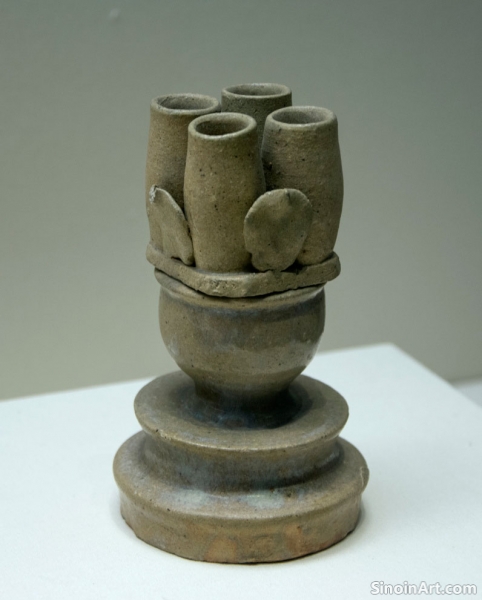 The glazes on Yue ware range in color from a pale grey-green to a deeper olive green. These colors are derived from the iron content of the clay and the controlled firing conditions. The subtlety of the glazing is a key characteristic of Yue wares.  Yue ware was produced in a variety of forms, including bowls, dishes, ewers, and vases, often inspired by shapes found in nature. The forms were often simple, elegant, and understated. The subtle elegance of the forms were an important part of their overall aesthetic. 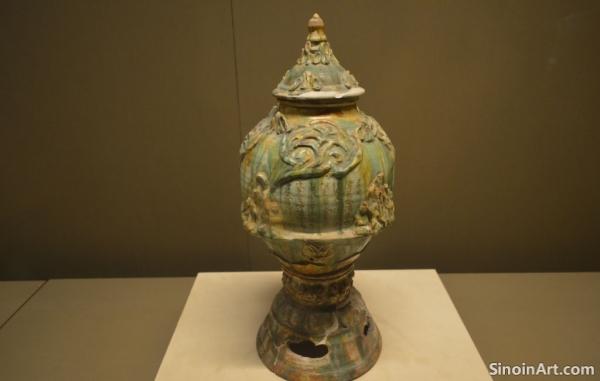 Yue ware was not only used domestically but was also exported to other parts of Asia. Its beauty and elegance were widely appreciated, and it influenced the development of celadon production in other regions. Yue ware was a highly prized export item of the Tang Dynasty. The legacy of Yue ware lies in its quiet beauty, its technical sophistication, and its influence on later generations of ceramic artists. The influence of Yue ware can be seen throughout the Chinese and Asian ceramic traditions. These pieces remain highly valued by collectors today. |
Tag : Yue ware, Tang Dynasty celadon, Chinese ceramics, Green glaze, Celadon pottery
Related information
- Technological Advances in Tang Kilns
- The Forms of Tang Ceramics: Function and Artistry
- The Vibrant World of Tang Ceramics: An Overview
- The Economic Importance of Tang Ceramic Production
- Burial Goods and the Afterlife in Tang Ceramics
Tang Dynasty advancements in kiln technology, such as high-firing kilns and lead glaze control, enabled potters to produce a greater variety of higher-quality ceramics, significantly influencing later ceramic traditions.
Tang Dynasty ceramics feature diverse forms ranging from elegant ewers and sancai tomb figures to robust storage jars and architectural elements, showcasing the intersection of function, artistry, and the diverse needs of the era.
Tang Dynasty ceramics (618-907 AD) are characterized by vibrant colors, diverse forms, and innovative techniques, most notably three-color (sancai) glazes, reflecting the prosperity and cultural exchange of the era.
Tang Dynasty ceramic production was economically significant, providing employment, fostering trade both domestically and internationally, and contributing significantly to the empire’s wealth, thereby stimulating economic growth.
The Tang Dynasty saw the flourishing of an elaborate burial culture, with ceramics playing a central role in equipping the deceased for the afterlife. These funerary wares, from everyday objects to elaborate figurines, offer a fascinating glimpse into Tang beliefs about death, the spirit world, and the continuation of earthly life in another realm. These burial goods were not just functional; they were imbued with symbolic meaning and designed to ensure the comfort and prosperity of the deceased.