Xieyi Painting and the Concept of "Yun Wei"
|
The term "Yun Wei" (韵味), often translated as "charm," "flavor," or "aftertaste," is an essential aesthetic quality in Xieyi painting, referring to the overall sense of feeling, emotion, and lingering impression that an artwork creates in the viewer. Yun Wei refers to the lasting impression the artwork leaves with the observer. 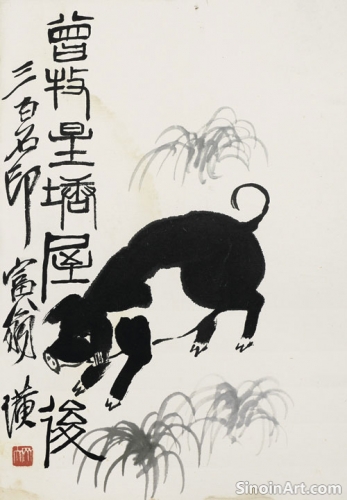 Yun Wei goes beyond mere visual appeal; it is a sense of subtle depth and expressiveness, a feeling that the artwork has something profound to communicate. It is the emotional and intellectual aftertaste, a lasting impression on the viewer. It is the power of suggestion and feeling.  Achieving Yun Wei requires a mastery of the techniques of ink and brush, as well as a deep understanding of the subject matter and the underlying emotions and concepts that the artist is trying to convey. It is a combination of skill, intent, and understanding. It is a result of both technical proficiency and a cultivated aesthetic sensibility.  Yun Wei often comes from the subtle variations in tone, texture, and line, as well as the interplay of ink and blank space, and the overall composition of the artwork. It is often found in the subtle details, the small choices that all add to the overall effect. It is these subtle nuances that create the painting’s enduring charm. Ultimately, Yun Wei is an intangible quality, something that is experienced rather than simply seen. It is the power of art to resonate with the viewer, leaving a lasting impression that goes beyond the surface appearance. It is the goal of all artists, to create something that will linger in the mind of the viewer. |
Tag : art charm, aesthetic flavor, lingering impression, Xieyi feeling
Related information
- The Role of the Brush in Xieyi Painting
- Contemporary Xieyi Artists to Explore
- Xieyi Painting and the Concept of "Intention Before the Brush"
- The Concept of "Yi" in Xieyi Aesthetics
- The Symbolism of Xieyi: Expressing Inner Worlds
The Chinese brush is essential to Xieyi painting, serving as an extension of the artist's hand and mind. Mastering brush types, grip, pressure, and stroke is crucial for creating the diverse range of expressive marks and textures characteristic of the art form.
Exploring the work of contemporary Xieyi artists reveals the ongoing evolution of this tradition, with artists incorporating abstraction, exploring social and political issues, experimenting with new techniques, and maintaining a connection to its core principles, thereby expanding the boundaries of the art form and ensuring its continued relevance in the modern world.
"Intention Before the Brush" (yi zai bi xian) is crucial in Xieyi painting, emphasizing that the artist's vision, emotional state, and purpose should guide their brushstrokes, requiring thoughtful preparation and planning while valuing spontaneity, imbuing the artwork with inner spirit and emotional truth.
"Yi" (untrammeled) is a highly valued aesthetic in Xieyi painting, referring to effortless freedom, spontaneity, a lack of artifice, and a sense of naturalness, achieved by letting go of rigid rules, allowing intuition to guide the brush, and creating artworks that are both expressive and simple.
This article explores the symbolic elements within Xieyi painting, focusing on how subjects, composition, and brushwork contribute to the expression of the artist's inner world and cultural values.