The Concept of "Yi" in Xieyi Aesthetics
|
"Yi" (逸), often translated as "untrammeled," "free," or "unrestrained," is a highly valued aesthetic quality in Xieyi painting, referring to a sense of effortless freedom, spontaneity, and a lack of artifice in the artwork. It's about creating an impression of naturalness and ease that goes beyond mere technical skill. It represents the freedom and spontaneity of the artistic act. 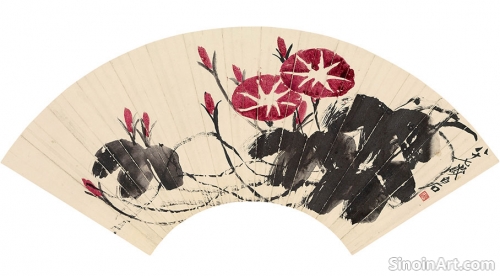 The pursuit of "Yi" involves letting go of rigid rules and conventions, allowing the brush to move freely across the paper, guided by intuition and the artist's inner feelings. The artist is not constrained by pre-conceived ideas, but instead they allow their creative vision to take over. This spontaneity is what creates the sense of freedom in the artwork. 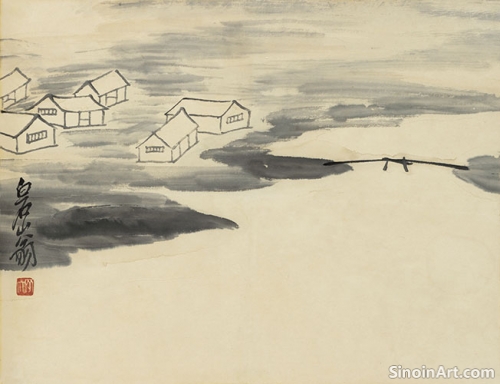 The sense of freedom in “Yi” is never chaotic, instead it is guided by the artist's experience and underlying technical skill. The artist must have a solid foundation in the basics before they can truly achieve this level of freedom. It's the ability to work from a place of confidence and skill. 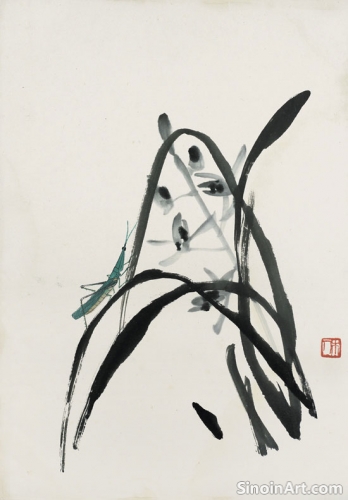 An artwork that embodies "Yi" often appears to be simple and effortless, but this simplicity belies the depth of understanding and technical skill that lies beneath the surface. The goal is to create an artwork that is both beautiful and deeply expressive, and that is never contrived or artificial. Ultimately, the aesthetic quality of "Yi" seeks to capture the feeling of the natural world, with its inherent spontaneity, grace, and lack of artifice. It is about creating something that is both true and beautiful, reflective of the natural world, and of the inner nature of the artist. |
Tag : Yi in art, untrammeled style, Xieyi freedom, unrestrained art, spontaneous feeling
Related information
- The Cultural Significance of Xieyi: Beyond Artistic Form
- The Brushstrokes of Xieyi: Mastering Spontaneity
- Xieyi Painting and the Depiction of Birds
- The "Three Perfections" in Xieyi
- Xieyi Painting as a Form of Personal Expression
This article explores the cultural significance of Xieyi painting, highlighting its connection to Daoist philosophy, Chinese values, artistic heritage, and its role in preserving and expressing Chinese cultural identity.
This article delves into the various brushstrokes and techniques used in Xieyi painting, emphasizing the importance of mastering spontaneity and ink control to convey the spirit of the subject.
Birds are frequently depicted in Xieyi painting through fluid brushstrokes that capture their form, movement, and energy, with symbolic meanings adding depth and emphasizing freedom, spontaneity, and the beauty of nature, while also showing the artist's technical skill and observation of the world.
The "Three Perfections" (sānjué) – poetry, calligraphy, and painting – represent the holistic literati ideal, emphasizing the integration of these three art forms as a complete expression of the artist's personal feeling, thought, and their connection to tradition, with calligraphy’s influence often seen in Xieyi’s brushwork.
Xieyi painting is a deeply personal form of expression, allowing artists to share their inner world, interpret their subject matter freely, and create unique artworks that reflect their individual vision, emotions, and experiences, making it a vehicle for both artistic expression and self-discovery.