The Role of the Brush in Xieyi Painting
|
The Chinese brush is not merely a tool; it's an extension of the artist's hand and mind. The type of brush, how it is held, and how it is manipulated all play a crucial role in the expressive qualities of Xieyi painting. The brush is a vehicle for the transmission of feeling and intent. 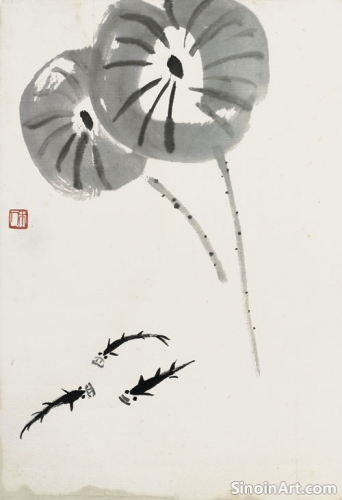 Different types of brushes, each made from different animal hairs and varying in size and flexibility, are used for different purposes. A soft, flexible brush might be used for creating fluid washes, while a stiff, dry brush might be used for creating textured lines. The artist must have a collection of brushes to achieve the full expressive range. The correct brush type is crucial to the process. 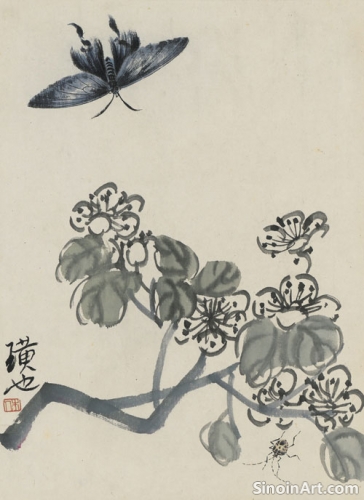 The way the artist holds the brush also impacts the final result. A more upright hold, for example, allows for greater control and precision, while a more angled hold allows for more dynamic and flowing strokes. Even a slight change in hand position will greatly alter the final effect. 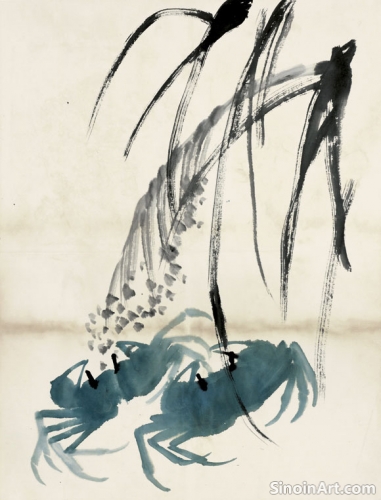 The pressure applied to the brush, the speed of the stroke, and the angle of the brush all affect the quality of the line. Varying these elements allows for the creation of a wide range of expressive marks and textures. The brush becomes the instrument through which the artist’s intentions are manifested. It is in these variations that the expressive power of Xieyi resides. Mastering the use of the brush takes years of dedicated practice. The artist must develop a deep sensitivity to the brush's responsiveness and must learn to control it with precision and intention. This practice elevates the technical skill to a form of meditative art. The mastery of the brush is integral to the Xieyi tradition. |
Tag : Chinese brush, brush techniques, brush types, brush handling, ink brush art
Related information
- Xieyi Painting and the Depiction of Birds
- The Role of the Inkstone in Xieyi
- The Brushstrokes of Xieyi: Mastering Spontaneity
- The Influence of Folk Art on Xieyi Painting
- Xieyi vs. Gongbi: Two Paths of Chinese Painting
Birds are frequently depicted in Xieyi painting through fluid brushstrokes that capture their form, movement, and energy, with symbolic meanings adding depth and emphasizing freedom, spontaneity, and the beauty of nature, while also showing the artist's technical skill and observation of the world.
The inkstone (yàn) is a vital part of Xieyi painting, influencing the quality and texture of ink, and serving as an object of both practical use and beauty, representing a key part of the ritual of painting and connecting the artist to tradition.
This article delves into the various brushstrokes and techniques used in Xieyi painting, emphasizing the importance of mastering spontaneity and ink control to convey the spirit of the subject.
Xieyi painting is also influenced by Chinese folk art, through its emphasis on boldness, simplicity, vibrant colors, directness, and storytelling, enriching the art form with expressive forms, a more accessible feel, and narratives that connect it to everyday life, history, and folklore.
This article contrasts Xieyi painting with Gongbi painting, highlighting the differences in their techniques, brushwork, use of color, and overall artistic philosophies within the Chinese painting traditions.