The Symbolism of Xieyi: Expressing Inner Worlds
|
While Xieyi painting is often praised for its spontaneity and expressiveness, it's also rich with symbolism, drawing from centuries of Chinese culture and tradition. Each element within a Xieyi painting, from the subject matter to the manner of its depiction, carries layers of meaning, reflecting the artist's inner world and their understanding of the natural world. The symbolic language of Xieyi adds depth and complexity to its expressive power.  The subjects commonly depicted in Xieyi painting are often imbued with symbolic significance. Bamboo, for instance, represents resilience, strength, and humility. Orchids symbolize elegance, refinement, and solitude. Plum blossoms, braving the winter cold, symbolize perseverance and renewal. These are not just depictions of plants but rather representations of human character and values. The selection of subjects reflects the painter’s inner world and philosophy. 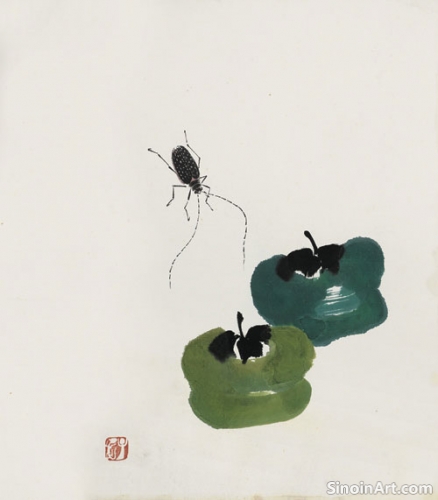 Animals are also imbued with symbolic meaning in Xieyi painting. The crane represents longevity and wisdom, the rooster signifies courage, and the tiger embodies strength and power. Each animal is depicted with bold brushstrokes that convey not only its physical form but also its inherent qualities. The animals become symbols of strength, integrity, and grace.  Beyond specific subjects, the overall composition and the use of space also contribute to the symbolic language of Xieyi painting. The empty space, often referred to as "white space," is not simply an absence of form; it's a crucial element in the composition that suggests infinity, balance, and harmony. The use of space is as important as the subject itself, creating a harmonious whole. The freehand brushwork and spontaneous nature of Xieyi painting also carry symbolic significance. The artist’s ability to capture the essence of a subject in a few strokes suggests a deep understanding of the natural world and a freedom from rigid convention. The spontaneity also implies an intimate relationship with nature, reflecting the Daoist influence of naturalness and freedom. By understanding the symbolism of Xieyi painting, viewers can appreciate it on a deeper, more meaningful level. It's not merely about the depiction of a subject; it's about the artist’s attempt to communicate their inner thoughts, feelings, and worldview through the language of brush and ink. This symbolic language adds an extra layer of depth that elevates the art beyond simple representation. |
Tag : Symbolism Xieyi, Chinese Art Meaning, Ink Painting Symbols, Expressive Art, Cultural Symbolism
Related information
- Xieyi Painting and the Depiction of Trees
- Xieyi Painting and the Concept of "Yi Qian Bi Hou"
- The Importance of Practice in Xieyi
- Xieyi Painting and the Concept of "Tian Qu"
- Xieyi Painting and the Use of "Light Ink"
Trees are a powerful subject in Xieyi painting, depicted through expressive brushwork and washes to capture their unique forms, textures, and symbolic representations of longevity, growth, resilience, and the connection between the human and natural realms, conveying both beauty and a profound appreciation for the cycles of life.
"Yi Qian Bi Hou" (intention before the brush) is central to Xieyi, emphasizing the importance of having a clear vision and intention before painting, so that brushstrokes naturally express the artist's inner feelings and ideas, requiring thoughtful preparation, and guiding brushwork with creativity and personal vision.
Dedicated and consistent practice is essential for mastering Xieyi painting, developing technical skills, intuition, and spontaneity, while also fostering patience, perseverance, and a deeper understanding of the art form's philosophy and aesthetics, transforming the practice into a form of self-discovery.
"Tian Qu" (natural charm) is a key aesthetic ideal in Xieyi painting, emphasizing a sense of effortless freedom, spontaneity, and a deep connection to nature, requiring artists to let their intuition guide the creative process, resulting in works that feel both deeply moving and authentically beautiful.
"Light Ink" (dànmò) is essential in Xieyi painting, using diluted ink to create subtle tones, soft washes, atmosphere, depth, and delicate transitions, requiring a mastery of brush control, ink dilution, layering, and a delicate touch to convey a sense of quiet beauty.