Xieyi Painting and the Concept of "Jing Jie"
|
The term "Jing Jie" (境界), often translated as "realm," "state," or "spiritual level," is a crucial concept in understanding the artistic and spiritual goals of Xieyi painting. It refers to the artist's ability to transcend mere technical skill and to achieve a deeper understanding of themselves, their subject matter, and the universe. It’s about achieving a transcendent state of being through the art process. 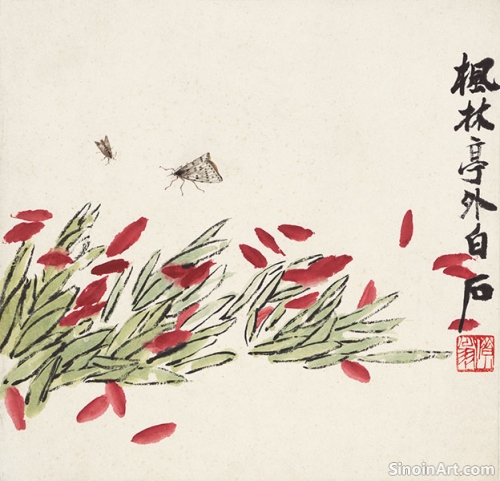 The pursuit of "Jing Jie" is not just about creating beautiful art; it is also about seeking a form of self-realization and spiritual enlightenment. It requires a constant dedication to practice, reflection, and a deep connection to the natural world. It is not just an artistic journey, it is also a spiritual one. 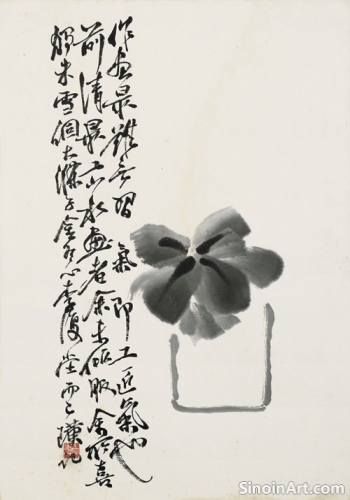 The artist must strive to move beyond the limitations of the intellect, to connect with their intuition, and to allow their brush to express the inner essence of things. The artist should try to reach a state of unmediated experience that transcends simple analysis. It is about achieving a deeper level of personal and creative awareness. 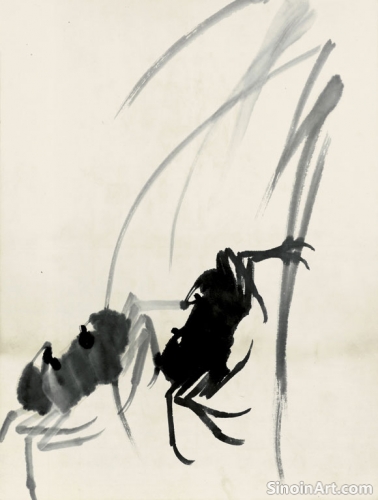 Achieving a high "Jing Jie" is often associated with a sense of freedom, spontaneity, and a profound understanding of the interconnectedness of all things. It's about reaching a sense of unity with the world. It represents a fusion of creativity and wisdom, where the artist is at one with their chosen subject. Ultimately, the concept of "Jing Jie" in Xieyi reflects the belief that art is not just a form of aesthetic expression, but a means of spiritual transformation. It is a deeply meaningful and powerful endeavor that goes far beyond the mere application of ink to paper. |
Tag : Jing Jie, art realm, spiritual state, transcendence, artistic enlightenment
Related information
- The Role of Color in Xieyi: Subtlety and Emphasis
- Key Techniques in Xieyi Brushwork
- The Influence of Chan (Zen) Buddhism on Xieyi
- Xieyi Painting and the Depiction of Water
- The Use of "Blank Space" in Xieyi
While often associated with monochromatic ink washes, color plays a significant role in many Xieyi paintings. When color is used, it is often applied subtly, with careful consideration for how it can enhance the overall composition. Color serves not as a literal depiction of reality but as an expressive tool that accentuates the subject’s spirit.
Key techniques in Xieyi painting include line drawing, splashing ink (Pomo), dry brush work, the control of ink washes, and the strategic use of negative space, each contributing to the expressive power of the artwork.
Chan (Zen) Buddhism profoundly influences Xieyi painting, emphasizing intuition, direct experience, mindfulness, and the concept of emptiness, aligning with the art form's focus on spontaneity, self-expression, and the pursuit of truth through art.
Water is a versatile subject in Xieyi, depicted through washes and expressive brushstrokes to convey fluidity, transparency, movement, and its symbolic connection to life, change, and nature, adding atmosphere and depth to landscape paintings, with varied forms representing a spectrum of feeling and power.
Liúbái (blank space) is a vital element in Xieyi painting, creating balance, depth, atmosphere, and encouraging active viewer participation while reflecting philosophical concepts of emptiness and possibility. It's as important as the inked areas.