The Influence of Chan (Zen) Buddhism on Xieyi
|
Chan (Zen) Buddhism has had a profound influence on the development and aesthetic principles of Xieyi painting. The emphasis on intuition, mindfulness, and the direct experience of reality resonates deeply with the spirit of spontaneity and self-expression that is central to this art form. The influence of Chan Buddhism is deeply rooted in Xieyi tradition. 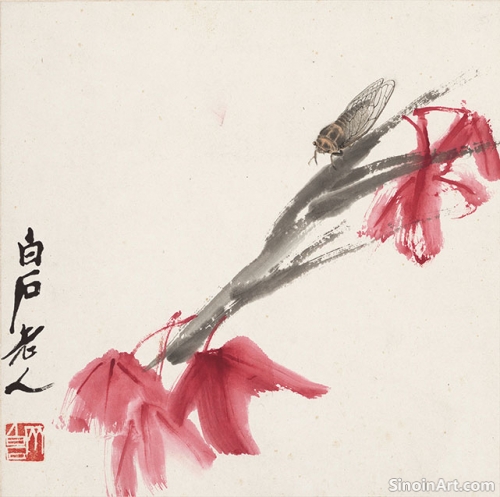 Chan Buddhism emphasizes the importance of living in the present moment, without intellectual analysis or deliberation. This emphasis on direct experience aligns with the Xieyi artist's focus on capturing the essence of a subject in the moment, without overthinking or over-refining. Spontaneity and intuition are highly valued in both disciplines. 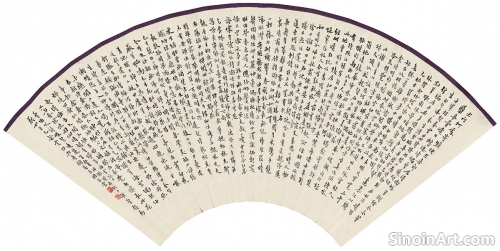 The practice of meditation, which is central to Chan Buddhism, can be seen as a parallel to the act of painting in Xieyi. Both require the artist to be fully present, focused, and aware of their inner state. The painting process becomes a form of meditative practice, a means to achieve inner peace. 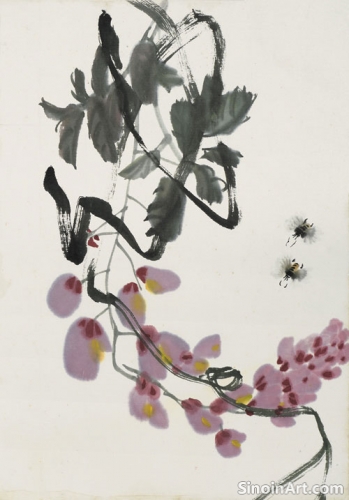 The concept of emptiness (sunyata) in Buddhism is reflected in the use of negative space in Xieyi painting. The blank areas are not seen as empty voids but as vital elements of the composition, contributing to its overall balance and harmony. The voids are just as meaningful as the inked areas. The goal of Chan Buddhism is to achieve enlightenment through direct experience. The artist, therefore, uses the brush as a means to express their understanding of the true nature of things. The painting is not merely a representation, but rather a manifestation of the artist’s personal insight and awakening. |
Tag : Chan Buddhism art, Zen influence, mindfulness art, intuitive expression, emptiness
Related information
- Xieyi Painting and the Concept of "Jing Jie"
- The Use of "Side Brush" in Xieyi
- The "Three Perfections" in Xieyi
- Xieyi Painting and the Concept of "Gu Yi"
- Xieyi Painting in the Modern World: A Timeless Art
"Jing Jie" (realm) in Xieyi refers to the artist's pursuit of spiritual enlightenment, transcending technical skill to achieve a deeper understanding of themselves, their subject, and the universe, emphasizing intuition, spontaneity, and interconnectedness as they strive for artistic and spiritual transformation.
The "Side Brush" (cèfēng) technique in Xieyi involves holding the brush at an angle to create strokes with distinct texture and varying width, allowing for greater expressiveness, dynamism, and effective depiction of textured surfaces and movement, a crucial skill for any Xieyi painter.
The "Three Perfections" (sānjué) – poetry, calligraphy, and painting – represent the holistic literati ideal, emphasizing the integration of these three art forms as a complete expression of the artist's personal feeling, thought, and their connection to tradition, with calligraphy’s influence often seen in Xieyi’s brushwork.
"Gu Yi" (ancient intention) in Xieyi emphasizes an artist's engagement with tradition, seeking to absorb the spirit and principles of past masters, studying their techniques and cultural context to create work that honors the legacy of the art form and contributes to its ongoing evolution.
This article explores the evolution of Xieyi painting in the modern world, highlighting the incorporation of contemporary themes, new materials, digital technologies, globalization, and its continued relevance.