Xieyi Landscape Painting: Capturing the Spirit of Nature
|
Landscape painting (山水画, shanshuihua) is a major theme in Xieyi, reflecting a deep reverence for nature. Artists seek not to replicate realistic views, but to capture the essence and spirit of the natural world. They aim to evoke a feeling of vastness, serenity, and harmony.  In Xieyi landscapes, mountains, rivers, trees, and rocks are often depicted with bold, gestural brushstrokes that convey the energy and vitality of nature. The use of ink wash creates a sense of atmosphere and depth, with mist, clouds, and distant hills often depicted using soft, subtle gradients of tone. 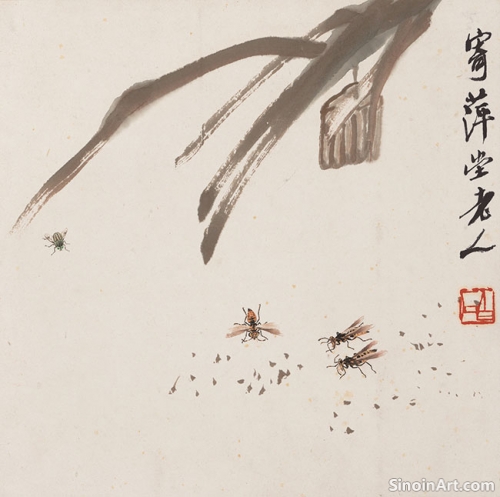 The composition in Xieyi landscape paintings often emphasizes asymmetry and balance, reflecting the natural forms and movements of nature. The artist chooses perspectives that suggest a vastness and openness, rather than focusing on realistic details.  Xieyi landscape painting is not just about representing what one sees but about expressing how one feels. The artist aims to create a personal interpretation of the landscape, reflecting their own emotions and spiritual connection with nature. Through the expressive use of brushwork and ink wash, Xieyi landscape painting invites viewers to experience the grandeur and tranquility of nature. The goal is not to create a photographic image but to evoke a feeling, a mood, and a sense of connection with the natural world. |
Tag : Xieyi Landscape Painting, Chinese Literati Landscape, Spirit of Nature in Painting, Ink Wash Landscape, Expressive Landscape Art
Related information
- Xieyi and the Concept of "Shu Hua Tong Yuan"
- Xieyi Painting and the Concept of "Yun Wei"
- The Use of "Broken Ink" in Xieyi
- The "Three Perfections" in Xieyi
- Early Development of Xieyi: Song and Yuan Dynasties
"Shu Hua Tong Yuan" (calligraphy and painting share the same source) is a fundamental concept in Chinese art and Xieyi painting, highlighting the shared tools, techniques, aesthetic principles, and expressive potential between calligraphy and painting, with calligraphic brushwork central to the Xieyi technique.
Yun Wei (charm, flavor, aftertaste) is a vital aesthetic quality in Xieyi painting, referring to the overall sense of feeling, emotion, and lingering impression that an artwork creates in the viewer, achieved through mastery of technique, subtle nuances, and the ability to express underlying meanings, creating a lasting impact.
"Broken Ink" (pòmò) is a key technique in Xieyi painting, involving layering wet ink to create rich and varied tones, depth, atmosphere, and a sense of spontaneity, reflecting a controlled approach to the unpredictable nature of ink and water, adding visual texture and depth.
The "Three Perfections" (sānjué) – poetry, calligraphy, and painting – represent the holistic literati ideal, emphasizing the integration of these three art forms as a complete expression of the artist's personal feeling, thought, and their connection to tradition, with calligraphy’s influence often seen in Xieyi’s brushwork.
The roots of Xieyi painting can be traced back to the Song Dynasty (960-1279), when scholar-officials began to develop a distinctive style of painting that reflected their unique values and aesthetics. The emphasis shifted from courtly patronage to individual expression, setting the stage for the emergence of Xieyi.