The "Three Perfections" in Xieyi
|
The concept of the "Three Perfections" (sānjué 三絕) – poetry, calligraphy, and painting – is central to understanding the literati ideal and its influence on Xieyi. This concept emphasizes the integration of these three art forms as a holistic expression of the artist's personal feeling, thought, and understanding of the world. It is a complete and comprehensive artistic expression.  A literati artist would strive to master all three disciplines, viewing them as mutually enriching and equally important. The ability to write beautiful poetry, create expressive calligraphy, and paint with skill was considered the hallmark of a cultured individual. All three disciplines were important for a complete expression. 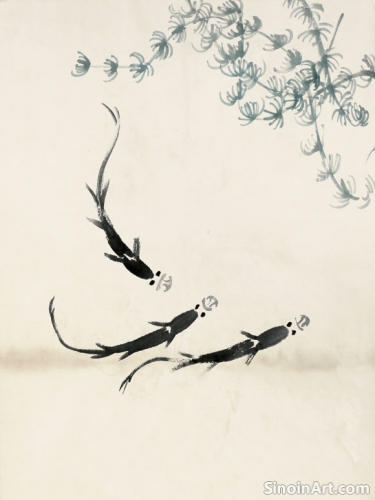 In Xieyi painting, the influence of calligraphy is particularly evident in the use of calligraphic brushstrokes. The artist aims to create lines that are not only visually appealing but also imbued with energy and expressiveness. The painter’s brushwork is directly related to the skill of a calligrapher.  The incorporation of poetry into Xieyi painting enhances the meaning and impact of the visual elements. The artist often selects poems that resonate with the subject matter and their personal vision, adding a new dimension to the artwork. It elevates the expression to a higher level of integrated creativity. The "Three Perfections" represent a holistic approach to art, emphasizing the importance of personal expression, intellectual cultivation, and a deep connection to the cultural and philosophical traditions of China. The artist sought an integrated and complete expression that combined all three disciplines. It is the complete union of artistic expression. |
Tag : Three Perfections, Sanjue, poetry calligraphy painting, literati ideal, Chinese art forms
Related information
- Xieyi Painting and the Depiction of Landscapes
- Learning Xieyi Painting: A Path of Practice
- The Significance of Composition in Xieyi
- The Influence of the Seal Script on Xieyi
- The Use of "Reversed Brush" in Xieyi
Xieyi landscapes (shānshuǐ) emphasize grandeur, depth, and qi, using negative space and suggestive brushstrokes to capture the essence, atmosphere, and inner vitality of the natural world, and expressing the artist’s connection to nature and understanding of the Tao.
Learning Xieyi painting involves mastering basic brushstrokes, observation of nature, studying old masters, developing a personal style, and cultivating patience and persistence. It is a process that blends technical skill with personal growth and understanding.
Composition, including the strategic use of negative space, asymmetrical balance, and flowing lines, is vital in Xieyi painting, guiding the viewer's eye, creating a sense of harmony, and supporting the artist's intention, despite the art form's seemingly spontaneous nature.
The Seal Script (zhuànshū) influences Xieyi painting through its emphasis on balance, flowing lines, symmetry, organic forms, and its use in artist's seals, inspiring the composition, line quality, and overall design, while also deepening the understanding of brush control, and ink application within the Xieyi tradition.
The "Reversed Brush" (nìfēng) in Xieyi involves starting a stroke by moving the brush in the opposite direction, then reversing to create strong, textured, dynamic lines, conveying a sense of force, resistance, and visual interest, while requiring precise control and a deep understanding of brush responsiveness.