Xieyi Figures: Capturing the Essence of Humanity
|
While less common than landscapes and flowers/birds, figure painting (人物画, renwuhua) also has a place within the Xieyi tradition. These works often focus on capturing the character and spirit of the individual rather than simply portraying a likeness. The focus is on expression and inner qualities. 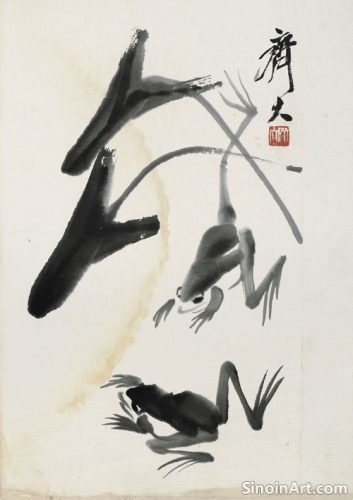 The brushstrokes in Xieyi figure painting are often bold and gestural, emphasizing the form and movement of the figure. Ink wash techniques are used to create depth and suggest the interplay of light and shadow. Artists prioritize capturing the essence of the human form.  Xieyi artists often depict figures in motion or in moments of contemplation, aiming to portray the complexity of human experience. The focus is often on expressing emotions and attitudes through subtle cues. The artist attempts to capture a glimpse into the human experience through their art. 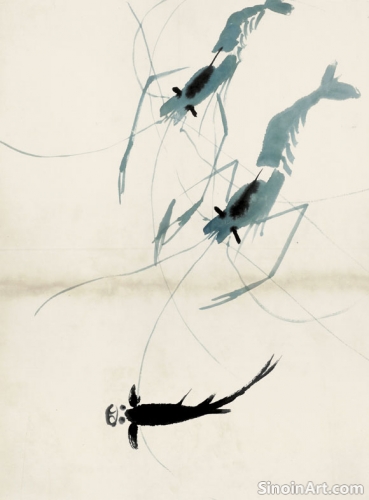 Unlike the carefully rendered details of Gongbi figure painting, Xieyi figures often have a more abstract and suggestive quality. The aim is not to replicate realism but to capture the essence and inner spirit of the figure. The goal is to create a form that resonates with the human experience. Through their unique interpretations of the human form, Xieyi figure painters offer insightful portrayals of the human condition. They strive to express the human experience with spontaneity, leaving an expressive, impactful mark. |
Tag : Xieyi Figure Painting, Chinese Literati Figure Art, Expressive Figure Painting, Ink Wash Figure, Essence of Humanity in Art
Related information
- The Use of "Multiple Brushstrokes" in Xieyi
- The Use of "Blank Space" in Xieyi
- The Concept of "Baimiao" and its Relationship to Xieyi
- The Use of "Side Brush" in Xieyi
- Xieyi Painting and the Use of "Light Ink"
"Multiple Brushstrokes" (cūn fǎ) are essential in Xieyi landscape painting, offering a variety of textured strokes that create a sense of depth, form, and visual complexity, requiring skill and strategic layering to depict mountains, rocks, and trees, adding dynamism and guiding the viewer’s eye through the composition.
Liúbái (blank space) is a vital element in Xieyi painting, creating balance, depth, atmosphere, and encouraging active viewer participation while reflecting philosophical concepts of emptiness and possibility. It's as important as the inked areas.
"Baimiao" (plain drawing) is a foundational technique in Chinese painting, emphasizing precise line drawing to define a subject's contours and forms, influencing Xieyi by shaping its underlying structure, informing composition, and contributing to the overall control and confidence seen in the best Xieyi works.
The "Side Brush" (cèfēng) technique in Xieyi involves holding the brush at an angle to create strokes with distinct texture and varying width, allowing for greater expressiveness, dynamism, and effective depiction of textured surfaces and movement, a crucial skill for any Xieyi painter.
"Light Ink" (dànmò) is essential in Xieyi painting, using diluted ink to create subtle tones, soft washes, atmosphere, depth, and delicate transitions, requiring a mastery of brush control, ink dilution, layering, and a delicate touch to convey a sense of quiet beauty.