The Concept of "Baimiao" and its Relationship to Xieyi
|
"Baimiao" (白描), often translated as "plain drawing" or "outline drawing," is a foundational technique in Chinese painting, characterized by the use of simple, unadorned lines to depict the contours and forms of a subject. While seemingly different from the expressive washes of Xieyi, Baimiao plays a crucial role in shaping its underlying structure and approach to form. It is a foundational technique that often informs the artist’s style. 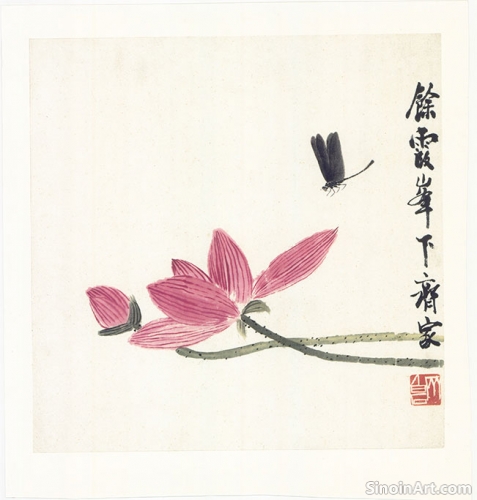 Baimiao emphasizes the precision and control of the brush, requiring a mastery of line drawing to accurately represent the shape and essential structure of a subject. It’s not about capturing every detail but about capturing the essential lines of the form. The training in Baimiao often shapes the overall style of the artist. 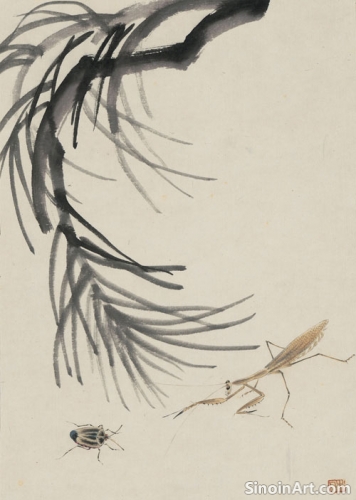 While Xieyi often uses washes and spontaneous strokes, the underlying understanding of form that is developed through Baimiao is essential for creating effective compositions. Even when the lines are less prominent in the finished work, they inform the way that the painting is structured. It provides a blueprint for the final form.  Many Xieyi artists incorporate elements of Baimiao into their work, using simple outlines to define certain elements or as a starting point for more expressive brushstrokes. The Baimiao lines can often be seen in the initial stages of the art process, or they can be strategically placed within the finished work. It serves as the foundation for creative development. The discipline and precision required in Baimiao contribute to the overall control and confidence that are evident in skilled Xieyi paintings. The practice of Baimiao also helps to refine the artist’s eye and hone their ability to capture essential forms. It is a technique that builds a foundation for future expressivity. |
Tag : Baimiao, plain drawing, Chinese outline, Xieyi form, foundational technique
Related information
- Xieyi Painting and the Depiction of Water
- Xieyi Painting and the Use of "Boneless Technique" ( Mògǔ)
- Xieyi Painting and the Concept of "Intention Before the Brush"
- Xieyi and the Concept of "Shu Hua Tong Yuan"
- Xieyi Painting and the Depiction of Landscapes
Water is a versatile subject in Xieyi, depicted through washes and expressive brushstrokes to convey fluidity, transparency, movement, and its symbolic connection to life, change, and nature, adding atmosphere and depth to landscape paintings, with varied forms representing a spectrum of feeling and power.
The "Boneless Technique" (mògǔ) in Xieyi relies on the absence of outlines, instead using washes of ink and color to create form and texture, resulting in fluid, organic works that require skill in blending and layering, as well as spatial awareness.
"Intention Before the Brush" (yi zai bi xian) is crucial in Xieyi painting, emphasizing that the artist's vision, emotional state, and purpose should guide their brushstrokes, requiring thoughtful preparation and planning while valuing spontaneity, imbuing the artwork with inner spirit and emotional truth.
"Shu Hua Tong Yuan" (calligraphy and painting share the same source) is a fundamental concept in Chinese art and Xieyi painting, highlighting the shared tools, techniques, aesthetic principles, and expressive potential between calligraphy and painting, with calligraphic brushwork central to the Xieyi technique.
Xieyi landscapes (shānshuǐ) emphasize grandeur, depth, and qi, using negative space and suggestive brushstrokes to capture the essence, atmosphere, and inner vitality of the natural world, and expressing the artist’s connection to nature and understanding of the Tao.