The Use of "Side Brush" in Xieyi
|
The "Side Brush" or cèfēng (側鋒) technique is a crucial element of Xieyi brushwork, referring to holding the brush at an angle, rather than directly perpendicular to the paper. This technique creates lines and strokes with a distinct texture and character, allowing for greater expressiveness and dynamism. The angle of the brush greatly alters the expressive capabilities of the artwork. 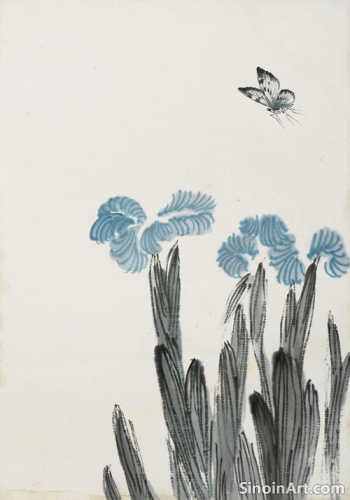 When using the side of the brush, the artist can create strokes that vary in width and texture, from broad washes to thin, scratchy lines. The technique adds a new dimension of texture and expressive depth. The results are not as smooth as applying the brush directly, giving a more natural and spontaneous feeling.  The "side brush" is particularly effective for depicting textured surfaces, such as rocks, tree bark, and old buildings, as well as creating a sense of movement and dynamism. It can recreate the textures found in the natural world. It can enhance the impression of dynamic movement through the composition.  This technique allows the artist to achieve greater spontaneity, as the strokes are less controlled and more unpredictable. It creates visual effects that are difficult to achieve with other techniques. It allows for dynamic and creative expression. It is a valuable tool for the Xieyi painter. Mastering the "side brush" technique is essential for any Xieyi artist, requiring practice, skill, and a deep understanding of the brush's responsiveness. It is not simply a matter of holding the brush at an angle; it requires a skilled hand and a cultivated eye. The application requires control, intention, and purpose. |
Tag : Side brush technique, Cefeng, angled brush, textured strokes, Xieyi technique
Related information
- The Concept of "Qing" in Xieyi Painting
- Materials and Tools for Xieyi Painting
- The Importance of "Dry Brush" in Xieyi
- Common Subjects in Xieyi Painting
- The Use of "Broken Ink" in Xieyi
"Qing" (feeling) is a fundamental concept in Xieyi painting, emphasizing the importance of artists imbuing their work with personal emotion and genuine expression, requiring sensitivity, observation, and technical skill to convey feelings through brushstrokes, composition, and connecting with viewers on a deeply human level.
The four treasures of the study - brushes, ink, paper, and inkstone – are crucial tools for Xieyi painting. Each tool, from brush construction to paper absorbency, affects the ink application and contributes to the unique character of the artwork.
The "Dry Brush" (kěbǐ) technique is essential in Xieyi, involving minimal ink and water to create broken, scratchy lines that add texture, depth, a sense of age, and dynamism, requiring a sensitive hand and enhancing the spontaneity and expressiveness of the art form.
Common subjects in Xieyi painting include bamboo, plum blossoms, landscapes, birds, flowers, and animals, each imbued with symbolism and representing aspects of nature and the artist's inner world.
"Broken Ink" (pòmò) is a key technique in Xieyi painting, involving layering wet ink to create rich and varied tones, depth, atmosphere, and a sense of spontaneity, reflecting a controlled approach to the unpredictable nature of ink and water, adding visual texture and depth.