Xieyi Painting and the Depiction of Trees
|
Trees are a powerful and symbolic subject in Xieyi painting, often depicted to express a range of emotions, philosophical ideas, and the artist's personal connection to nature. They are often viewed as representations of strength, resilience, and the interconnectedness of all things. They provide a versatile subject for exploration within the Xieyi tradition. 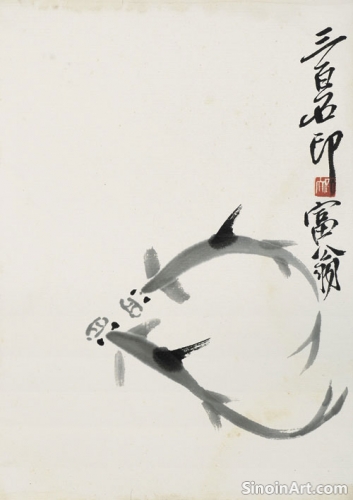 The use of expressive brushstrokes and ink washes allows the artist to capture the unique forms and textures of different types of trees, from the delicate branches of a willow to the gnarled trunks of an ancient pine. The artist often seeks to highlight the unique qualities of each tree they choose to represent. 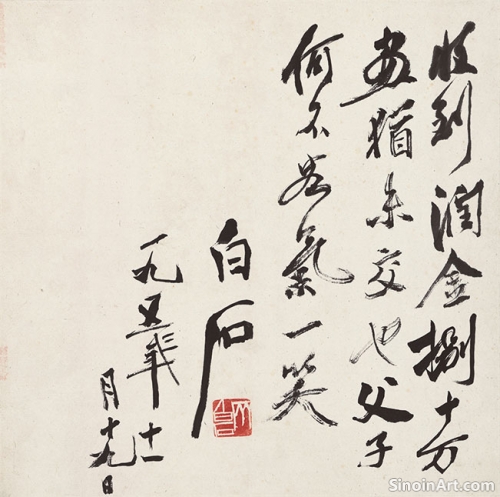 Trees in Chinese culture often symbolize longevity, growth, and the ability to adapt to changing circumstances. These symbolic meanings add depth and nuance to the artist’s personal and creative expression. These universal symbols resonate deeply with audiences of all cultures. 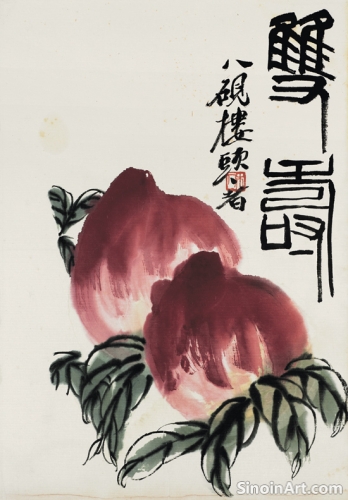 The act of painting trees can also be seen as a form of meditation, allowing the artist to connect with the natural world, to observe the beauty and rhythms of nature, and to express their inner feelings through the movement of the brush. The act of painting becomes a form of spiritual and creative exploration. Through the depiction of trees, Xieyi artists often explore the themes of resilience, strength, and the cyclical nature of life, offering viewers a means of contemplation and spiritual connection. The trees serve as a bridge between the human and natural realms, connecting the human condition to the wider forces of nature. They embody a sense of peace and the eternal cycle of life. |
Tag : Tree painting, Xieyi trees, Chinese flora, ink wash nature, symbolic subject
Related information
- Xieyi Painting in the Modern World: A Timeless Art
- Xieyi Painting and the Concept of "Intention Before the Brush"
- The "Three Perfections" in Xieyi
- Xieyi and the Concept of "Shu Hua Tong Yuan"
- The Brushstrokes of Xieyi: Mastering Spontaneity
This article explores the evolution of Xieyi painting in the modern world, highlighting the incorporation of contemporary themes, new materials, digital technologies, globalization, and its continued relevance.
"Intention Before the Brush" (yi zai bi xian) is crucial in Xieyi painting, emphasizing that the artist's vision, emotional state, and purpose should guide their brushstrokes, requiring thoughtful preparation and planning while valuing spontaneity, imbuing the artwork with inner spirit and emotional truth.
The "Three Perfections" (sānjué) – poetry, calligraphy, and painting – represent the holistic literati ideal, emphasizing the integration of these three art forms as a complete expression of the artist's personal feeling, thought, and their connection to tradition, with calligraphy’s influence often seen in Xieyi’s brushwork.
"Shu Hua Tong Yuan" (calligraphy and painting share the same source) is a fundamental concept in Chinese art and Xieyi painting, highlighting the shared tools, techniques, aesthetic principles, and expressive potential between calligraphy and painting, with calligraphic brushwork central to the Xieyi technique.
This article delves into the various brushstrokes and techniques used in Xieyi painting, emphasizing the importance of mastering spontaneity and ink control to convey the spirit of the subject.