Xieyi Painting and the Concept of "Yi Qian Bi Hou"
|
"Yi Qian Bi Hou" (意前筆後), often translated as "intention before the brush," is a concept central to Xieyi painting, emphasizing that the artist should have a clear vision and intention before beginning a painting, so that the brushstrokes become a natural manifestation of this underlying vision. It is a principle that emphasizes the planning that takes place before the actual execution of the artwork. The underlying concept is always more important than its manifestation. 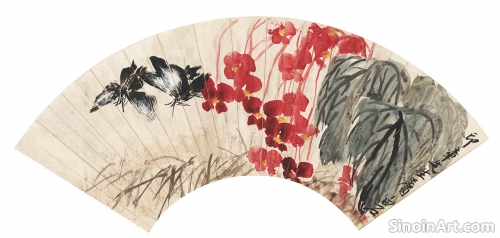 This concept means that the artist should not just be copying what they see but also expressing their own unique interpretation, feelings, and ideas about their subject. It goes beyond simple representation and it emphasizes the inner life of the artist. The artist's inner state is an essential element of the finished artwork. 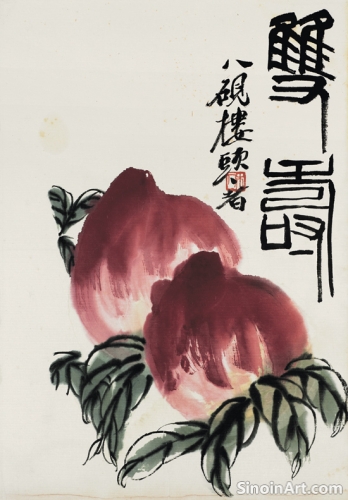 "Intention before the brush" highlights the importance of thoughtful planning and preparation, so that the artist has a strong foundation before they begin applying brushstrokes to the paper. The underlying structure is essential for the overall success of the work. It is a balance between planning and spontaneity. 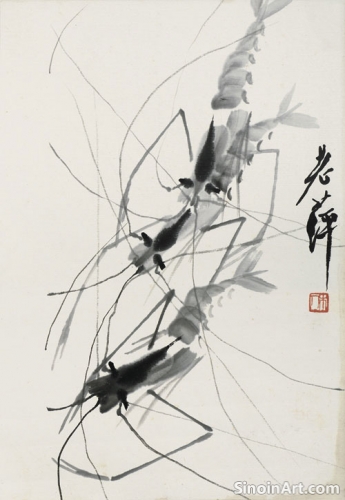 This concept emphasizes that the artist’s creative spirit should guide the brush, rather than being dictated by technical considerations alone. Technique should be used to express the creative intention of the artist, and that creativity must come from within. The technical skills are merely a tool to achieve a higher goal. Ultimately, the principle of "Yi Qian Bi Hou" underscores the belief that true art comes from the heart and mind, and that technique should always serve the artist’s inner vision. It is an expression of their unique and personal view of the world. The art should be a reflection of their inner creative voice. |
Tag : intention first, planning in art, Xieyi concept, creative vision
Related information
- Contemporary Xieyi Artists to Explore
- Xieyi Painting and the Expression of Loneliness
- The Spiritual and Philosophical Dimensions of Xieyi
- The Influence of Folk Art on Xieyi Painting
- The Significance of Brushwork in Xieyi Painting
Exploring the work of contemporary Xieyi artists reveals the ongoing evolution of this tradition, with artists incorporating abstraction, exploring social and political issues, experimenting with new techniques, and maintaining a connection to its core principles, thereby expanding the boundaries of the art form and ensuring its continued relevance in the modern world.
Xieyi painting powerfully expresses loneliness through suggestive compositions, vast negative space, solitary subjects, muted colors, and a sense of introspection, exploring solitude and the human condition, evoking melancholy and longing, and providing a space for contemplation and self-reflection.
Xieyi painting is deeply rooted in Chinese philosophy, particularly Daoism and Chan Buddhism, emphasizing the importance of spontaneity, mindfulness, the pursuit of qi or vital energy, and the spiritual significance of emptiness in art.
Xieyi painting is also influenced by Chinese folk art, through its emphasis on boldness, simplicity, vibrant colors, directness, and storytelling, enriching the art form with expressive forms, a more accessible feel, and narratives that connect it to everyday life, history, and folklore.
Brushwork is at the heart of Xieyi painting, serving as the primary means of artistic expression. The brush is not merely a tool; it is an extension of the artist’s hand and emotions. Mastery of the brush is essential to conveying the spirit and essence of a subject.