Xieyi Painting and the Concept of "Tian Qu"
|
"Tian Qu" (天趣), often translated as "natural charm," "heavenly interest," or "divine spontaneity," is a crucial aesthetic ideal in Xieyi painting. It refers to the quality of art that seems to arise naturally, without effort or artifice, reflecting a sense of spontaneity and a deep connection to the natural world. It is the seemingly effortless quality that is often the most prized in Xieyi painting. It is an expression of the underlying harmony of the universe. 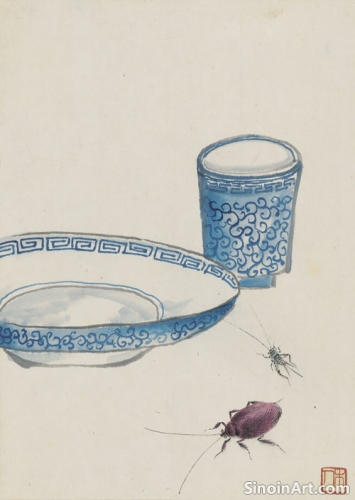 The pursuit of "Tian Qu" involves allowing the creative process to flow freely and naturally, without forcing or controlling the brushstrokes. The goal is to be in alignment with natural forces and to allow the art to emerge without any sense of effort. The work should feel natural, organic, and spontaneous. 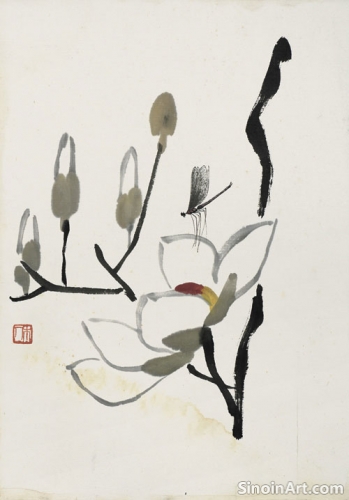 This concept underscores the importance of connecting with one’s intuition and inner feelings, allowing them to guide the creative process, rather than relying solely on technical knowledge or pre-conceived ideas. It comes from a place of internal balance and a clear connection to creative intention. 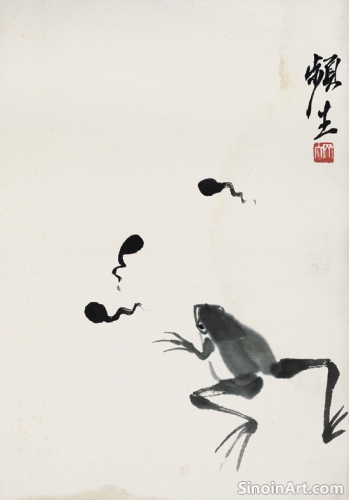 An artwork that embodies "Tian Qu" often appears to be simple, effortless, and deeply moving. The artwork is imbued with a feeling of life and vitality. It resonates on a deeper emotional and intuitive level. It is a state of natural harmony with both the artist’s inner self, and also with the nature of the universe. Ultimately, "Tian Qu" reflects the belief that true art should be a reflection of the natural world, spontaneous, and imbued with a sense of beauty and wonder. The artist is not just painting an image, they are reflecting the beauty of the world, and their own inner response to it. It is the subtle and nuanced expression of the beauty and wonder of the universe. |
Tag : natural charm, spontaneous art, divine style, Xieyi beauty
Related information
- The Significance of the Seal in Xieyi
- The Role of the Brush in Xieyi Painting
- Xieyi Painting and the Depiction of Bamboo
- The Enduring Significance of Xieyi Painting
- The Connection Between Xieyi and Chinese Gardens
The seal (yìn) is an essential component of Xieyi painting, serving as the artist's signature, authenticating the artwork, adding to its visual composition, and often expressing personal philosophy or tracing provenance, all within the context of Chinese artistic tradition.
The Chinese brush is essential to Xieyi painting, serving as an extension of the artist's hand and mind. Mastering brush types, grip, pressure, and stroke is crucial for creating the diverse range of expressive marks and textures characteristic of the art form.
Bamboo is a popular subject in Xieyi painting, valued for its elegant form, resilience, and rich symbolic meaning, with artists using bold, fluid brushstrokes and calligraphic lines to capture its essence, its vital energy, and to express core values of integrity, resilience, and a meditative connection to nature.
Xieyi painting's enduring significance lies in its rich history, philosophical depth, and emphasis on personal expression, spontaneity, and the pursuit of essence, connecting with audiences through its timeless aesthetic, connection to nature, and human spirit, while contemporary artists ensure its continued practice, evolution, and relevance in the world of art.
Xieyi painting and traditional Chinese gardens share a focus on naturalness, harmony, strategic use of negative space, and asymmetry, both creating microcosms of nature that foster contemplation, reflection, and a deeper connection to nature and the human spirit, displaying shared design principles and underlying goals.