Xieyi vs. Gongbi: Two Paths of Chinese Painting
|
Chinese painting offers two dominant styles, each with its unique approach to representing the world: Xieyi and Gongbi. While both styles are deeply rooted in Chinese tradition, they represent contrasting artistic philosophies. Xieyi prioritizes freehand expression and capturing the essence of a subject, whereas Gongbi focuses on meticulous detail and precise representation. Understanding the differences between these two approaches provides a deeper appreciation of Chinese art. 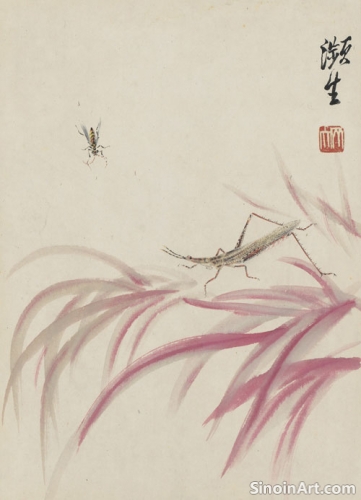 Gongbi painting, as previously discussed, is characterized by its detailed realism, precisely rendered outlines, and careful layering of color. It requires immense patience and technical skill, with artists often spending weeks or months on a single painting. The focus is on accurately depicting the external appearance of a subject, conveying a sense of clarity, and detail. This results in artwork with meticulous detail and precision. 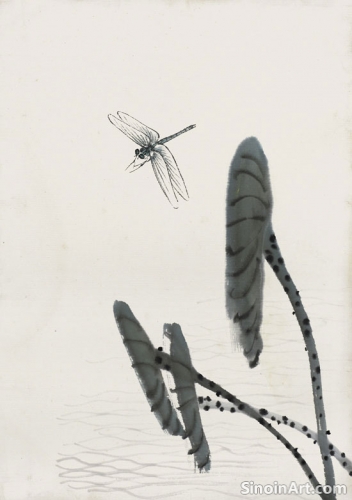 Xieyi painting, on the other hand, prioritizes capturing the inner essence and spirit of a subject through freehand brushwork and expressive use of ink. It's a more spontaneous style, allowing the artist's personal feelings and intuitions to guide the brush. The focus is on conveying the emotional response of the artist to the subject, rather than its objective likeness. The brushwork in Gongbi painting is typically characterized by fine, precise lines, often referred to as “iron wire lines.” These lines define the forms of the painting with clarity and accuracy. In contrast, the brushwork in Xieyi painting is more varied, incorporating bold, sweeping strokes, dry brush techniques, and a range of ink washes. The expressiveness of the brush stroke is key to the Xieyi painting. The use of color also differs significantly between the two styles. Gongbi painting often employs a wide array of mineral-based pigments to achieve a sense of vibrancy and realism. Colors are carefully layered, building up the intensity and depth. Xieyi painting, on the other hand, tends to rely more on ink washes and a more limited palette of colors. The tonal quality of the ink is just as important as color, and is often the main focus. In essence, Gongbi and Xieyi represent two different ways of seeing and representing the world. Gongbi seeks to capture the external beauty of the world with meticulous precision, while Xieyi strives to express the underlying spirit of things with spontaneous brushstrokes. These two distinct yet complementary styles, together, form the rich and varied landscape of Chinese painting. |
Tag : Xieyi vs Gongbi, Chinese Painting Styles, Expressive vs Meticulous, Freehand Art, Traditional Chinese Art
Related information
- The Brushstrokes of Xieyi: Mastering Spontaneity
- The Influence of Taoism on Xieyi Painting
- The Enduring Appeal of Xieyi Painting
- Xieyi Painting as a Means of Meditation
- Xieyi Painting and the Concept of "Tian Qu"
This article delves into the various brushstrokes and techniques used in Xieyi painting, emphasizing the importance of mastering spontaneity and ink control to convey the spirit of the subject.
Taoism, with its emphasis on living in harmony with nature, has significantly influenced the development of Xieyi painting. The Taoist concept of the Tao (道), the underlying principle of the universe, is reflected in the ways that Xieyi artists capture the flow of life.
The enduring appeal of Xieyi painting stems from its emotional and intuitive power, achieved through personal expression, spontaneity, suggestive imagery, and the pursuit of essence, connecting with viewers across cultures, and inspiring contemplation, tradition, and a deep understanding of the human experience.
The practice of Xieyi painting serves as a form of meditation, fostering mindfulness, focus, and a sense of connection with the inner self, nature, and the creative process, allowing artists to express inner feelings, explore personal growth, and find a sense of peace and balance.
"Tian Qu" (natural charm) is a key aesthetic ideal in Xieyi painting, emphasizing a sense of effortless freedom, spontaneity, and a deep connection to nature, requiring artists to let their intuition guide the creative process, resulting in works that feel both deeply moving and authentically beautiful.