The Role of Line in Gongbi: Structure and Expression
|
In the world of Gongbi painting, the line is not just a boundary; it is the very foundation upon which the entire artwork is constructed. Unlike other painting styles that may use broader strokes and washes to create forms, Gongbi relies heavily on the meticulous application of precise, deliberate lines. These lines define shapes, delineate details, and contribute to the overall structure and expression of the painting. The control and nuance present in each line are a testament to the artist's skill and understanding of the art form.  The basic technique of outlining, known as "gougou," is central to the Gongbi process. This method involves creating fine, unbroken lines to define the contours and internal details of the subject matter. The thickness and pressure of these lines can vary, creating a sense of depth and dimension. The lines are not just boundaries but also expressions of volume, texture, and light, adding a dynamic quality to the painting. A skilled artist uses line weight effectively to suggest form.  Line work in Gongbi goes beyond just defining outlines. The internal lines within a form, such as the veins of a leaf or the texture of a fabric, are rendered with just as much precision and care. These intricate details contribute to the overall realism and complexity of the painting. The use of carefully drawn lines creates a sense of texture and allows the viewer to appreciate the intricate detail of the subject matter. 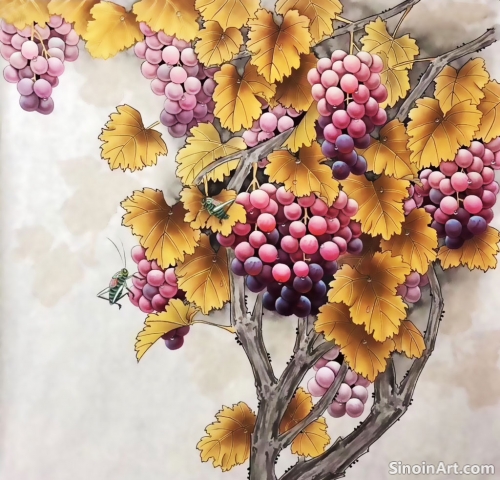 The control of the brush and the application of ink are crucial for creating effective lines. Artists use a variety of brush tips to achieve different line weights and textures. Mastery of ink density, water control, and brush handling are essential for producing precise and consistent lines. This skill is the culmination of years of practice and is often what separates an average work from a masterpiece. Ultimately, the lines in Gongbi painting are not merely decorative or descriptive; they are a form of visual language. They express the artist's understanding of form, composition, and the underlying essence of the subject matter. Through the careful application of line, Gongbi artists are able to translate the complexity and beauty of the world onto a two-dimensional surface. The lines are the skeleton of the painting, the essential structure of the art form. |
Tag : Gongbi line work, Chinese painting lines, gougou technique, brushwork in Gongbi, line expression
Related information
- The Symbolic Language of Gongbi: Exploring Motifs and Meanings
- The Challenge of Large-Scale Gongbi Painting
- The Future of Gongbi: Digital Tools and Traditional Techniques
- Gongbi Painting and its Place in Contemporary Art Discourse
- Preserving Gongbi: The Importance of Education and Practice
This article explores the rich symbolism embedded in Gongbi paintings, focusing on the meanings of flowers, animals, landscapes, and colors, and explaining how these symbols enhance the narrative and cultural significance of the artwork.
This article explores the unique challenges of creating large-scale Gongbi paintings, including maintaining precision, acquiring specialized materials, managing composition, and the time-consuming process of layering colors and details.
This article explores the future of Gongbi painting, highlighting the use of digital tools to aid in the creative process, facilitate sharing, and expand the art form’s reach, while emphasizing the importance of maintaining traditional techniques.
This article explores the place of Gongbi painting in contemporary art discourse, highlighting how artists are using the art form to address modern concerns, engage with tradition, and contribute to a wider global artistic conversation.
Emphasizes the importance of education and practice for preserving the techniques and traditions of Gongbi painting, advocating for community support and the passing down of skills.