The Challenge of Large-Scale Gongbi Painting
|
While many Gongbi paintings are created on relatively small surfaces, some artists choose to work on much larger scales. The creation of large-scale Gongbi paintings presents a unique set of challenges that require both technical mastery and artistic ingenuity. These large works require the artist to have both technical skill and the vision to work on a grand scale. 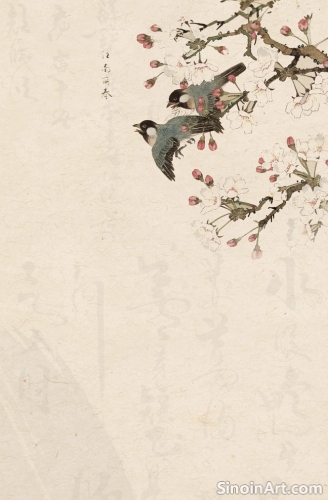 One of the most significant challenges in creating large-scale Gongbi paintings is maintaining the same level of precision and detail that is characteristic of the style. The larger scale requires a greater level of physical endurance, technical accuracy, and artistic vision. The ability to maintain a high level of accuracy across a large surface is a key skill. 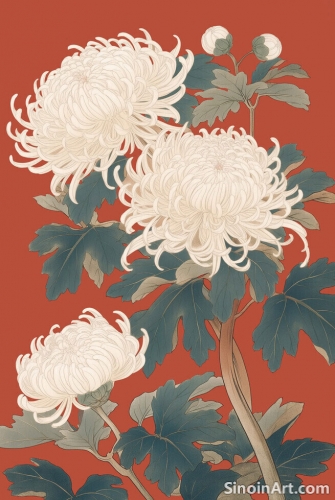 Working on a large scale requires specialized materials and tools. Larger brushes, custom-made paper, and a suitable working space are all essential for the artist to execute their vision. The ability to acquire the right tools for the large scale is often challenging and expensive for artists.  Another challenge is managing the composition and overall visual balance of a large-scale Gongbi painting. The artist must carefully plan the arrangement of elements, ensuring that the overall artwork remains harmonious and visually compelling. These large compositions require meticulous planning and execution. The process of layering colors and details, which is fundamental to the Gongbi technique, is much more time-consuming and demanding on a large scale. The artist needs both patience and stamina to create a large, fully realized work. The larger the scale, the more time is needed for each layer of paint. Despite the many challenges involved, large-scale Gongbi paintings offer a unique opportunity for artists to create immersive and impactful works of art. These works have both a visual and visceral impact on the viewer due to their large size and technical complexity. |
Tag : Large-scale Gongbi, oversized painting, challenging art, complex art, demanding techniques
Related information
- Famous Gongbi Artists: Masters of the Brush
- Gongbi in the Modern Age: Contemporary Artists and Innovations
- Gongbi and Personal Expression: The Artist's Voice
- Gongbi Painting and the Art of Miniature
- Unveiling the Techniques of Gongbi: A Step-by-Step Guide
A profile of influential Gongbi artists throughout history, highlighting their contributions and styles.
This article explores the evolution of Gongbi painting in the modern era, highlighting the innovative approaches of contemporary artists, the incorporation of new themes and techniques, and the use of technology, while maintaining the core principles of the tradition.
This article focuses on Gongbi painting as a vehicle for personal expression, highlighting how artists use choices in subject matter, color, composition, and overall tone to convey their unique perspectives and artistic visions within the traditional art form.
This article explores the art of miniature Gongbi painting, highlighting the challenges, specialized techniques, subject choices, and how these tiny works demonstrate the artists’ skill and ability to capture detail and beauty on a small surface.
This article provides a step-by-step guide to the techniques involved in creating a Gongbi painting, covering the sketching, outlining, layering, shading, and final detailing stages.