The Symbolic Language of Gongbi: Exploring Motifs and Meanings
|
Gongbi painting, beyond its visual beauty, is rich with symbolic meaning. Every subject depicted, from the smallest insect to the grandest landscape, often carries cultural significance. Flowers, for example, are often chosen for their specific symbolic associations. The peony, known as the "king of flowers," represents wealth and prosperity, while the lotus symbolizes purity and enlightenment. Understanding these symbolic meanings adds another layer of appreciation to the artwork.  Animals, like flowers, are often depicted for their symbolic significance. Birds such as the phoenix and the crane hold auspicious meanings, representing rebirth and longevity, respectively. The depiction of fish, often seen in pairs, signifies abundance and marital harmony. Even insects like the butterfly, with its delicate wings, can be used to represent transformation and beauty. The artist's careful selection of these symbolic elements contributes to the deeper narrative and message of the painting. 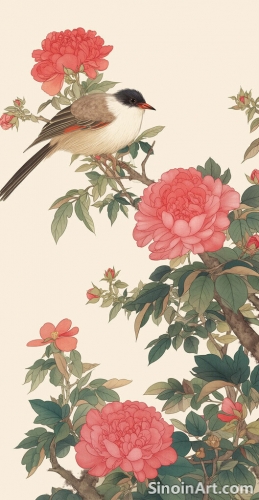 Landscapes in Gongbi painting are not merely realistic depictions; they are often imbued with symbolic importance. Mountains, for example, symbolize steadfastness and stability, while flowing water represents the passage of time. The carefully arranged placement of rocks, trees, and other landscape features are all symbolic cues that contribute to the overall harmony and meaning of the composition. The symbolic language embedded within these scenes reflects a deep understanding of Chinese philosophical beliefs. 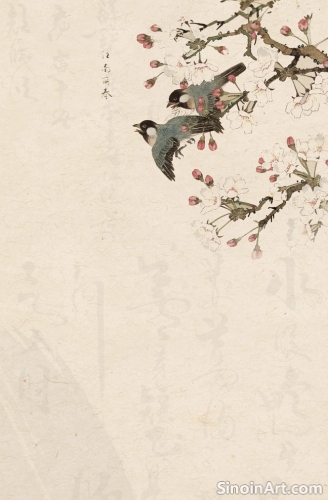 Even the colors used in Gongbi painting can carry symbolic weight. Red, for instance, is associated with luck and happiness, often used in celebratory contexts. Yellow is considered the imperial color, representing power and authority. Blue and green are associated with nature and tranquility. The careful application of these colors, in addition to their visual effect, adds to the overall symbolic expression of the artwork. Artists carefully choose and layer colors to convey the intended meaning. Understanding the symbolic language of Gongbi painting allows us to appreciate the art form on a deeper level. It is not just about visual representation; it is about communicating complex ideas and cultural beliefs through careful composition, detail, and the selection of symbolic elements. The symbolic language helps connect viewers to the rich cultural heritage embedded within the art form and allows them to engage with it on a more profound and meaningful level. |
Tag : Symbolic meaning in Gongbi, Chinese art symbols, flower symbolism, animal symbolism, color symbolism
Related information
- Techniques and Tools: Unveiling the Secrets of Gongbi
- The Future of Gongbi: Digital Tools and Traditional Techniques
- Gongbi Painting and the Depiction of Waterfalls and Streams
- The Gongbi Line: A Foundation of Precision and Expressiveness
- The Delicate World of Gongbi: An Introduction
An in-depth look at the techniques and tools used in Gongbi painting, covering brushes, ink, pigments, and painting surfaces.
This article explores the future of Gongbi painting, highlighting the use of digital tools to aid in the creative process, facilitate sharing, and expand the art form’s reach, while emphasizing the importance of maintaining traditional techniques.
This article explores the depiction of waterfalls and streams in Gongbi painting, highlighting the techniques used to capture the flow, movement, and reflective qualities of water, and how these works demonstrate a mastery of technique and appreciation for nature.
Gongbi lines are characterized by their fineness, evenness, and consistent width. Artists utilize specialized fine-pointed brushes to create these lines, ensuring that every stroke is deliberate and controlled. The consistent thickness of the lines requires years of practice, and this skill is central to the Gongbi style. It is within the precise lines that the work begins to define itself.
This article introduces Gongbi painting as a precise and detailed art form within Chinese traditional art, highlighting its techniques, historical themes, materials, and contemporary relevance.