The Development of Bronze in the Spring and Autumn Period: New Forms, Techniques, and Regional Styles
|
The Spring and Autumn period (771-476 BCE) in China witnessed significant changes in the production and style of bronze ware, as regional kingdoms emerged and developed their own unique artistic traditions. This period saw a move away from the more uniform designs of earlier periods to a richer, more varied approach to the metalworking arts. The fragmentation of the political landscape helped to lead to a greater degree of artistic experimentation.  Bronze objects from the Spring and Autumn period often featured new forms, decorative patterns, and innovative casting techniques. The artistic traditions of the period demonstrate a growing degree of technical expertise and also a clear desire to experiment with new and different forms and designs.  Regional variations in bronze ware became more pronounced during this period, with kingdoms like Chu, Wu, and Yue, developing their own distinct approaches to bronze production, blending aspects of the Central Plains style with their own unique artistic sensibilities. The interplay of local styles and Central Plains styles helped to shape the unique and varied character of this era. 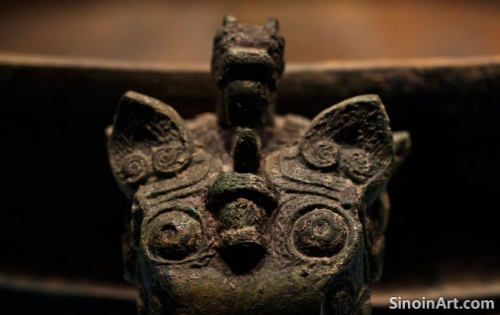 The rise of trade and cultural exchange also played a role in shaping bronze designs, with foreign influences, particularly from neighboring nomadic tribes, becoming more readily apparent in some regional styles. The cross-cultural interplay helped to enhance the variety and interest of the metal works of the era. The study of bronze ware from the Spring and Autumn period reveals the increasing artistic freedom and experimentation that took place during this time, as well as the unique styles that were developing throughout ancient China. The diversity of the bronze work helps to paint a clearer picture of the complex history and culture of the time. |
Tag : Spring and Autumn bronzes, regional styles, Chinese metalworking, ancient innovation, bronze evolution
Related information
- Bronze Ware and Ancient Chinese Beliefs About Immortality: The Quest for Everlasting Life
- The Influence of Bronze Ware on the Development of Chinese Seal Carving
- The Archaeological Significance of Chinese Bronze Ware: Discoveries and Insights
- Regional Variations in Chinese Bronze Ware: Exploring Cultural Diversity
- Preserving Chinese Bronze Ware: Challenges and Methods of Conservation
This article explores the connection between bronze ware and ancient Chinese beliefs about immortality, highlighting how mirrors, vessels, and symbolic designs were used to ensure the well-being of the deceased, and to help with their passage to an eternal existence.
This article explores the influence of bronze ware on the development of Chinese seal carving, highlighting the shared techniques, the stylistic similarities, the transmission of decorative motifs, and the interconnectedness of these two art forms.
This article explores the archaeological significance of Chinese bronze ware, highlighting the discoveries at various sites, the insights gained into ancient society, metallurgy, trade, and the overall contribution to our understanding of early China.
This article explores the regional variations in Chinese bronze ware, highlighting how different regions developed their unique styles, forms, and techniques, reflecting the diverse cultural landscape of ancient China.
This article discusses the challenges and methods of conserving Chinese bronze ware, highlighting the vulnerability to corrosion, the specific techniques used for cleaning and preservation, and the overall importance of safeguarding these artifacts for the future.