Gongbi vs. Xieyi: Contrasting Styles in Chinese Art
|
Article:  One of the fascinating aspects of Chinese painting is the duality between the meticulous precision of Gongbi and the expressive freedom of xieyi. Understanding the differences between these two major styles is essential for appreciating the diversity and depth of Chinese artistic traditions. While both are rooted in the same cultural heritage, they offer distinct approaches to capturing the world around us.  Gongbi, as previously discussed, emphasizes precise detail and realistic representation. Every line, every color wash, is carefully planned and executed. The focus is on creating a faithful likeness of the subject, highlighting its intricate details and textures. It is a style that demands patience, meticulous planning, and a mastery of the brush. The end result is a painting that showcases both technical proficiency and artistic vision. 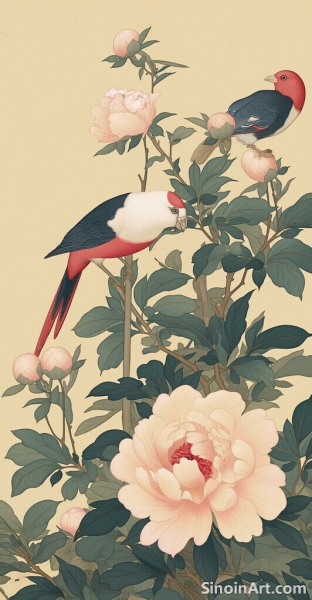 In contrast, xieyi, often translated as “freehand” or “sketching ideas,” focuses on conveying the essence or spirit of the subject through simplified forms and spontaneous brushstrokes. The emphasis is on capturing the energy and movement of the subject rather than replicating its minute details. Xieyi artists often utilize bold, sweeping strokes and employ a minimal amount of color, allowing the ink and brushwork to speak for themselves. It's a style that values spontaneity, personal expression, and the artist's immediate connection with the subject. The contrast between Gongbi and xieyi is evident not only in their techniques but also in their intended effect. Gongbi often strives to create a sense of serene beauty and harmony, emphasizing the aesthetic qualities of the subject. Xieyi, on the other hand, aims to evoke a sense of dynamism, movement, and emotional intensity. These differences reflect the artists' personal preferences and the different goals they wish to achieve in their work. Both Gongbi and xieyi are integral parts of the rich tapestry of Chinese painting, each offering unique insights into the world around us and the artistic process itself. While they represent opposing approaches, they often complement each other, showcasing the full range of artistic possibilities within this ancient tradition. They are not competing but rather, different languages within the same artistic vocabulary. |
Tag : Gongbi vs Xieyi, Chinese painting styles, meticulous vs freehand, brushwork in Chinese art, traditional painting comparison
Related information
- The Depiction of Flowers and Birds in Gongbi: A Symbolism Unveiled
- Gongbi and the Representation of Textiles and Patterns
- Gongbi and the Art of Botanical Illustration
- Gongbi Painting and its Role in Cultural Diplomacy
- Gongbi Painting and the Concept of "Shanshui"
This article explores the depiction of flowers and birds in Gongbi painting, focusing on their symbolic meanings, the techniques used in their rendering, and their role in conveying both beauty and cultural narratives.
This article explores the meticulous representation of textiles and patterns in Gongbi painting, highlighting the detailed linework, color variations, and how these elements convey texture, volume, and contribute to the overall narrative of the artwork.
This article explores the relationship between Gongbi painting and botanical illustration, highlighting the meticulous detail, precise linework, accurate color layering, and how these techniques contribute to both artistic beauty and scientific accuracy in the depiction of plants.
This article explores the role of Gongbi painting in cultural diplomacy, highlighting its ability to foster cross-cultural understanding, promote artistic collaboration, and serve as a symbol of Chinese cultural identity on the global stage.
This article explores the relationship between Gongbi painting and the concept of "Shanshui," highlighting the presence of core Shanshui principles, such as the balance of yin and yang, the detailed rendering of nature, and the integration of humans into the natural order within Gongbi landscapes.