Gongbi Painting and the Concept of "Shanshui"
|
While "Shanshui" (mountain-water) painting is often associated with the more expressive style of Xieyi, elements of this tradition are also visible in the more detailed works of Gongbi. Although Gongbi landscapes have a different approach than Xieyi, the underlying principles of Shanshui, emphasizing the balance between yin and yang, and the harmony between humans and nature, are still evident in Gongbi painting. 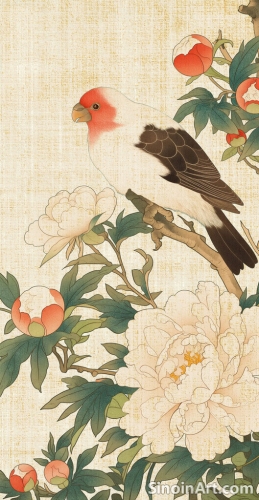 The Shanshui concept emphasizes the interplay of mountains (yang) and water (yin), two opposing but complementary forces that are essential to the balance of the universe. In Gongbi landscapes, these elements are rendered with meticulous detail, reflecting their natural forms and textures. This detailed rendering is still intended to reflect the principles of the Shanshui.  The representation of space in Shanshui painting, which often relies on atmospheric perspective and the layering of elements to create a sense of depth, also has echoes in Gongbi painting. While not as free and open as in Xieyi paintings, Gongbi artists use meticulous detail to create depth within the painting. This controlled method still conveys the sense of expansiveness. 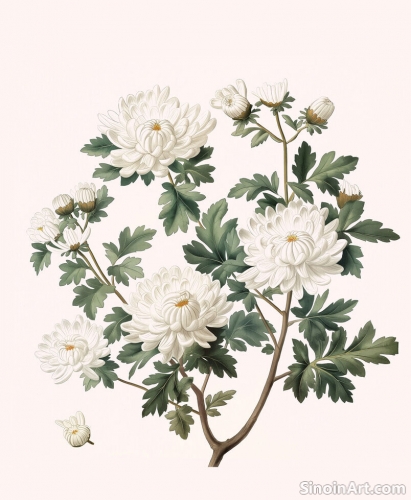 The careful arrangement of mountains, water, trees, and other elements in a Gongbi landscape reflects the underlying principles of harmony and balance that are central to Shanshui painting. Artists carefully place and proportion the elements within the composition to create balance. This aspect of composition is similar to that found in Shanshui paintings. In addition to the natural elements, Shanshui paintings often include human figures, animals, or buildings. These elements are not just part of the visual landscape, but they also serve to integrate human presence into the larger natural order. This balance between humanity and nature is a core element of Shanshui, and the human element is often seen in Gongbi landscapes as well. The influence of Shanshui on Gongbi provides a deeper understanding of the way in which this art form connects to the broader tradition of Chinese landscape painting and its underlying philosophical principles. While the techniques are very different, there are connections between the styles that can be appreciated through a deeper understanding of the history. |
Tag : Gongbi and Shanshui, Chinese landscape art, yin and yang, nature in art, traditional Chinese painting
Related information
- The Delicate Dance of the Brush: An Introduction to Gongbi
- The Use of Gold Leaf in Gongbi: Adding a Touch of Opulence
- Famous Gongbi Artists: Masters of the Meticulous Brush
- The Spiritual Aspects of Gongbi Painting
- Gongbi Painting and the Four Gentlemen: Symbolism in Nature
This article introduces Gongbi painting, a meticulous Chinese art form characterized by its detailed and realistic depictions, outlining its history, techniques, and contemporary relevance.
Discusses the use of gold leaf in Gongbi painting, its application techniques, symbolism, and contribution to the opulence and visual impact of the art.
This article highlights the contributions of famous Gongbi artists throughout history, including Emperor Huizong, Li Tang, Qiu Ying, and Chen Hongshou, discussing their unique styles and influence on the tradition.
An examination of the spiritual dimensions of Gongbi painting, highlighting its meditative qualities and connection to nature.
Explores the symbolism of the Four Gentlemen (plum blossom, orchid, bamboo, chrysanthemum) in Gongbi painting, highlighting their cultural significance and representation.