Gongbi and the Art of Botanical Illustration
|
Gongbi painting, with its meticulous detail and precise rendering, is closely related to the art of botanical illustration. The attention to detail and the need for scientific accuracy mean that the techniques and aesthetic principles of Gongbi are very useful when depicting plants and flowers. Many Gongbi paintings could also be classified as botanical studies. 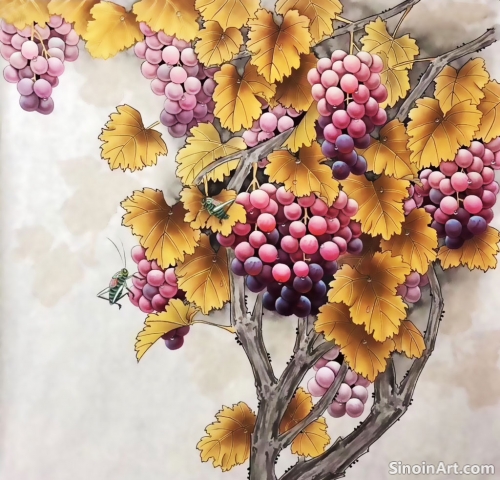 The creation of botanical illustrations using Gongbi techniques requires not only artistic skill but also a deep understanding of plant anatomy and morphology. The artists must accurately render the structure of the plants, from the intricate details of the leaves and petals to the form of the stems and roots. Detailed observation and study of the plant is essential to producing an accurate work. 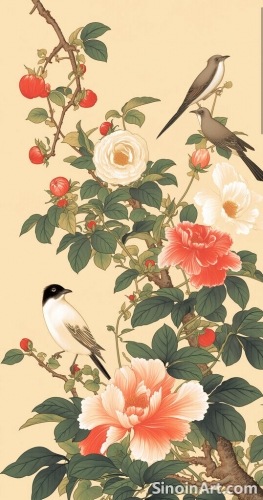 The precise linework of Gongbi, using the “gougou” method, is particularly well suited for capturing the delicate details of botanical subjects. The fine lines delineate the edges of leaves, petals, and other plant structures with great precision. The outlines are the base for the rest of the painting. 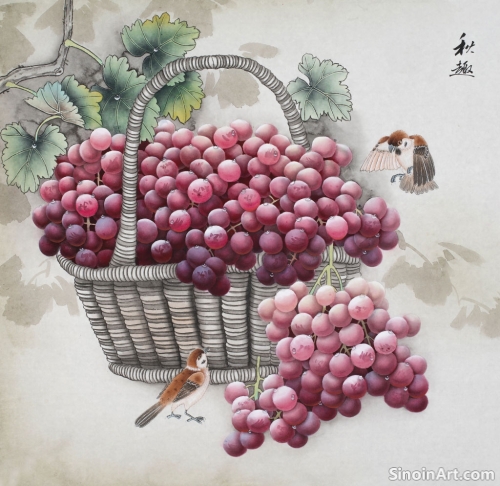 The use of color is equally important in Gongbi botanical illustration. Artists carefully layer washes of color to capture the subtle variations in hue and tone, accurately representing the unique color palette of each plant. This technique creates both accuracy and visual depth in the work. The placement of plants in the compositions is also a part of the overall style. The arrangement of the leaves, flowers, and other elements of the plant creates a composition that is both visually appealing and botanically accurate. The style also often reflects the artist's aesthetic sensibility. The blending of art and science in Gongbi botanical illustration creates works that are both visually beautiful and scientifically informative. The blend of accuracy and artistic interpretation creates a unique and valuable approach to botanical illustration. The meticulous detail makes these paintings both beautiful and useful for study. |
Tag : Gongbi botanical, botanical illustration, plant art, flower painting, scientific art
Related information
- The Materials of Gongbi: A Palette of Tradition
- The Gongbi Line: A Foundation of Precision and Expressiveness
- Gongbi and the Depiction of Architecture
- The Influence of Taoism and Confucianism on Gongbi
- Gongbi Painting as a Form of Meditation and Mindfulness
This article explores the essential materials used in Gongbi painting, focusing on the unique characteristics of brushes, silk, xuan paper, mineral pigments, and other tools.
Gongbi lines are characterized by their fineness, evenness, and consistent width. Artists utilize specialized fine-pointed brushes to create these lines, ensuring that every stroke is deliberate and controlled. The consistent thickness of the lines requires years of practice, and this skill is central to the Gongbi style. It is within the precise lines that the work begins to define itself.
This article explores the depiction of architecture in Gongbi painting, highlighting the meticulous detail, historical accuracy, use of perspective, and interplay of light and shadow, showcasing how this art form captures both the physical appearance and cultural significance of buildings.
This article explores the influence of Taoism and Confucianism on Gongbi painting, highlighting how these philosophical traditions have shaped the aesthetic values, themes, and overall approach to artistic creation in this meticulous art form.
This article explores the connection between Gongbi painting and meditation, highlighting how the meticulous process fosters mindfulness, focus, and a contemplative state of mind for the artist.