Gongbi Painting and the Four Gentlemen: Symbolism in Nature
|
Within the rich tapestry of Gongbi painting, the representation of the “Four Gentlemen” – the plum blossom, orchid, bamboo, and chrysanthemum – holds a special significance. These plants are not merely aesthetic motifs; they are revered symbols of virtue and character in Chinese culture, each embodying unique qualities that resonate with the ideals of the scholar-gentleman. Understanding their symbolism is key to fully appreciate many traditional artworks. 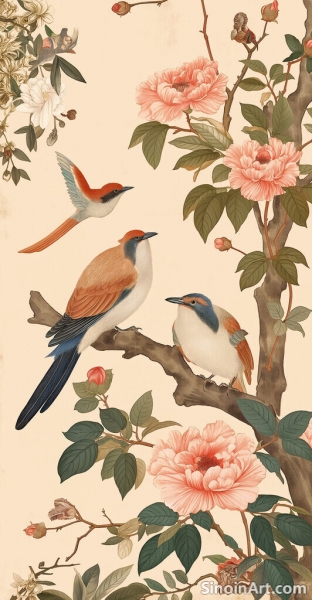 The plum blossom, which blooms in the depths of winter, symbolizes resilience, perseverance, and courage in the face of adversity. Its delicate petals and fragrant blossoms are seen as a testament to the power of beauty to flourish even in the harshest conditions. This makes it a popular subject during Chinese New Year celebrations. 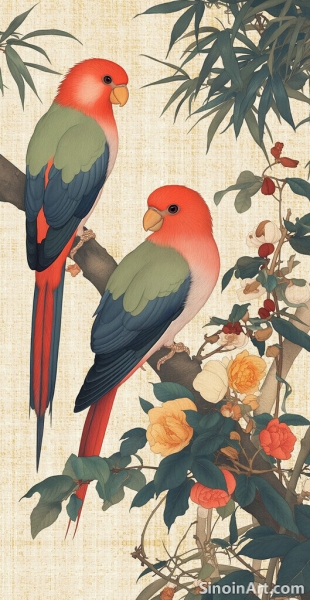 The orchid, with its subtle beauty and refined elegance, represents humility, grace, and integrity. Its understated charm and delicate fragrance are seen as symbols of inner purity and moral strength. It embodies the Confucian ideal of the “gentleman.” 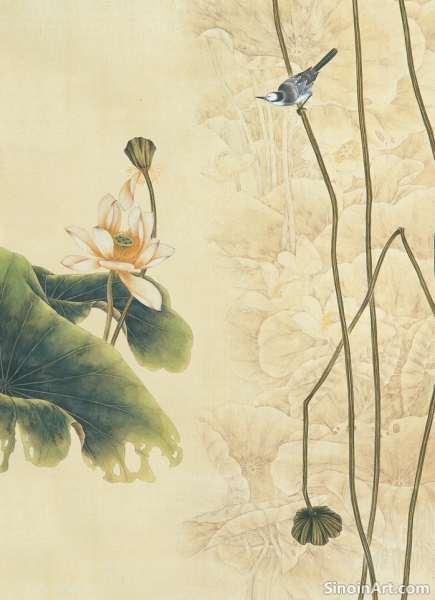 Bamboo, with its upright stance and hollow core, symbolizes integrity, uprightness, and humility. Its ability to withstand strong winds and bend without breaking represents the resilience and flexibility of a noble character. It’s known for its ability to adapt and thrive. The chrysanthemum, which blooms in the autumn, symbolizes longevity, steadfastness, and resilience. Its late bloom is seen as a symbol of steadfastness and the ability to persevere through challenging times. It’s often associated with peace and tranquility. The Four Gentlemen are often depicted in Gongbi painting to embody these values and to serve as an inspiration for self-cultivation. They are not merely pretty pictures, but a powerful representation of cultural values. The act of painting them can be a kind of meditation on virtue itself. They serve as symbols that remind us of those values that we aspire to in ourselves. |
Tag : Four Gentlemen painting, Chinese flower symbolism, plum blossom, orchid art, bamboo painting, chrysanthemum symbolism
Related information
- Gongbi and the Court: Patronage and Artistic Standards in Imperial China
- Gongbi Painting and its Place in Contemporary Art Discourse
- Gongbi Painting and its Use in Book Illustration
- The Spiritual Aspects of Gongbi Painting
- Gongbi Painting and the Use of Light and Shadow
The history of Gongbi painting is intrinsically linked to the imperial courts of China, where it flourished under the patronage of emperors and the elite classes. The demand for highly detailed and realistic depictions of the natural world and court life led to the development of the meticulous techniques and refined aesthetic characteristic of the Gongbi tradition. This patronage significantly shaped the evolution and preservation of this distinctive style.
This article explores the place of Gongbi painting in contemporary art discourse, highlighting how artists are using the art form to address modern concerns, engage with tradition, and contribute to a wider global artistic conversation.
This article explores the use of Gongbi painting in book illustration, highlighting its ability to bring narratives to life through detailed depictions, accurate representations, and vibrant colors, and how this enhances the reader's understanding and appreciation of the text.
An examination of the spiritual dimensions of Gongbi painting, highlighting its meditative qualities and connection to nature.
This article explores the subtle but skillful use of light and shadow in Gongbi painting, highlighting the use of color gradations, brushstrokes, and how these techniques contribute to creating a sense of depth, volume, atmosphere, and enhance the overall impact of the artwork.