The Use of Gold Leaf in Gongbi: Adding a Touch of Opulence
|
The use of gold leaf in Gongbi painting is a hallmark of the style, adding a touch of opulence and luminosity to the artwork. Gold, traditionally associated with wealth, power, and divinity, has long been a cherished material in Chinese art, used to enhance the visual impact of paintings and create a sense of grandeur and importance. Its use also makes the art shine, both literally and metaphorically.  The application of gold leaf is a delicate and demanding process that requires skill and experience. Thin sheets of gold are carefully applied to the surface of the painting, often using a thin adhesive made from animal glue or rice starch. The gold is then burnished or polished, creating a lustrous and reflective surface. This step is key to achieving the desired effect. 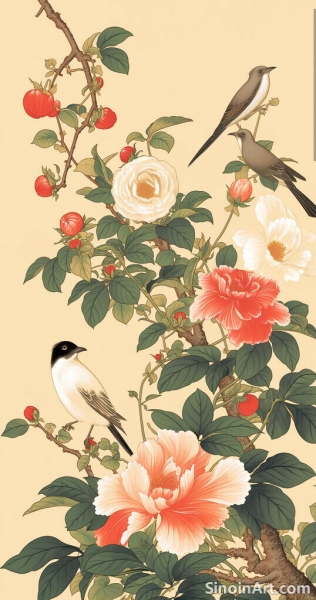 Gold is often used in Gongbi painting to highlight important elements, such as the clothing of figures, the petals of flowers, or the scales of dragons. The use of gold draws the viewer’s eye to these focal points, creating a visual hierarchy that enhances the overall composition. This ensures that the key elements of the work are always in focus. 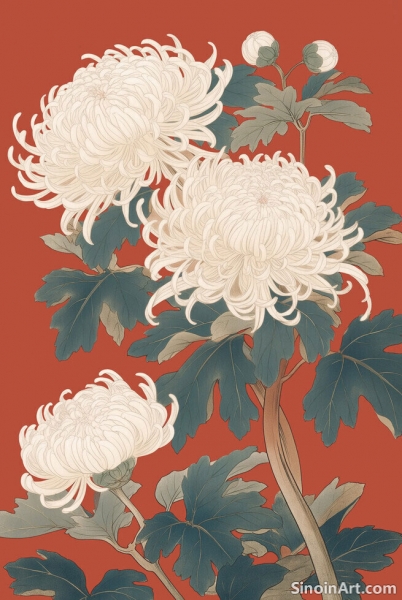 The reflective properties of gold leaf also add a dynamic quality to the painting, as the light interacts with the surface, creating a subtle play of shimmering effects. This gives the painting a sense of life and movement, adding to its overall beauty and impact. The light reflecting from the gold gives it a depth that cannot be achieved with other materials. Beyond its aesthetic appeal, the use of gold in Gongbi painting is also deeply symbolic. It often signifies royalty, divinity, and spiritual enlightenment, adding another layer of meaning to the artwork. The use of gold, therefore, makes it more than just an aesthetic choice, but also a symbolic one. It elevates the painting to something more than mere decoration. |
Tag : Gold leaf in Gongbi, Chinese gold art, traditional gilding, opulent painting, gold symbolism
Related information
- The Meticulous Hand: Precision and Detail in Gongbi Painting
- Gongbi and Xieyi: Two Sides of the Brush
- Gongbi Painting and the Art of Storytelling
- The Materials of Gongbi: A Palette of Tradition
- Gongbi and the Depiction of Jewelry and Accessories
Chinese Gongbi painting, distinguished by its meticulous detail and precise execution, stands as a testament to the dedication and technical skill of its practitioners. Unlike the expressive spontaneity of Xieyi (freehand) painting, Gongbi emphasizes a controlled and highly detailed approach, striving for a realistic depiction of the subject matter. This pursuit of perfection is central to the aesthetic and philosophy of the Gongbi tradition.
This article contrasts Gongbi and Xieyi painting styles, highlighting their differing approaches to brushwork, techniques, subject matter, and overall artistic expression.
This article explores the use of Gongbi painting as a medium for storytelling, highlighting the use of detailed scenes, character portrayal, symbolism, settings, and how these elements bring narratives from history, mythology, literature, and everyday life to visual form.
This article explores the essential materials used in Gongbi painting, focusing on the unique characteristics of brushes, silk, xuan paper, mineral pigments, and other tools.
This article explores how Gongbi painting depicts jewelry and accessories, highlighting the meticulous detail, use of line and color to convey textures and reflections, and how these objects contribute to the overall cultural and visual richness of the artwork.