The Delicate Dance of the Brush: An Introduction to Gongbi
|
Gongbi, meaning “meticulous” or “fine brush,” is a traditional Chinese painting technique characterized by its highly detailed and realistic depictions. Unlike its expressive counterpart, Xieyi (freehand or spontaneous style), Gongbi emphasizes precise outlines, carefully applied layers of color, and a dedication to capturing the essence of the subject with exceptional accuracy. This style, deeply rooted in ancient Chinese art, continues to captivate art lovers around the world with its refined elegance and technical mastery. It's not just about creating a likeness; it's about imbuing the subject with life and spirit through the painter's painstaking process. 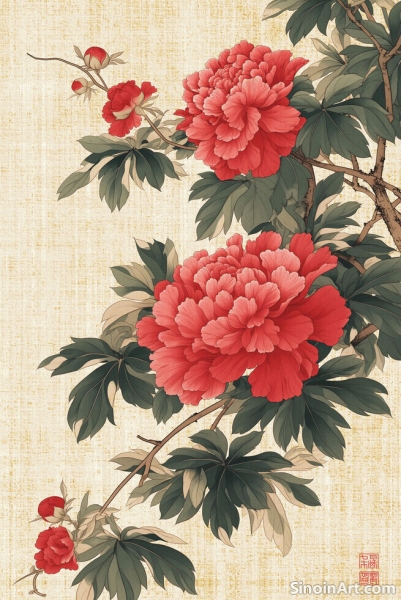 The history of Gongbi painting stretches back centuries, with evidence of its existence found in the early Tang Dynasty. Initially, it was used to portray court scenes, portraits of emperors and nobles, and depictions of auspicious animals and flora. The materials used were, and continue to be, significant – primarily silk or fine paper, ink, and mineral-based pigments, all contributing to the unique visual effect of the artwork. Over time, the subject matter expanded, but the core principles of detailed rendering and color precision remained at the heart of the practice. Famous examples from the Song Dynasty showcase the pinnacle of Gongbi artistry, featuring meticulous bird and flower paintings that continue to inspire artists today.  The process of creating a Gongbi painting is a testament to patience and skill. It begins with a careful sketch, often using charcoal, which is then meticulously traced over with fine ink lines. This outline is the foundation of the painting, and its precision is critical to the final result. Once the ink outline is dry, the artist begins the process of layering color, starting with thin washes and gradually building up the intensity and depth. This layering technique, combined with careful blending and shading, creates a sense of realism and volume, making the subject appear almost three-dimensional on the flat surface.  Gongbi painting is not simply about replicating what the eye sees; it is about infusing the painting with emotion and meaning. Each stroke, each meticulously rendered detail, is chosen with intent, conveying subtle nuances that might be missed in a more casual observation. The choice of color is equally important, often imbued with symbolic meaning derived from Chinese tradition. For instance, the vibrant hues of a peony might represent prosperity, while the elegant simplicity of a bamboo might symbolize resilience and humility. In contemporary times, Gongbi painting has experienced a revival, with artists exploring new themes and techniques while remaining true to the core principles of the tradition. While some maintain the classic subjects of birds and flowers, others are now incorporating human figures, modern landscapes, and even abstract concepts into the meticulous style. This adaptability ensures that the intricate beauty of Gongbi painting continues to thrive and resonate with audiences both in China and around the globe. |
Tag : Chinese Gongbi Painting, Traditional Chinese Art, Meticulous Painting, Fine Brush Painting, Chinese Brushwork
Related information
- Gongbi Painting and the Concept of "Shanshui"
- Gongbi and the Use of Stippling and Pointillism Techniques
- The Influence of Gongbi on Contemporary Art
- Gongbi Painting as a Form of Meditation and Mindfulness
- The Challenge of Large-Scale Gongbi Painting
This article explores the relationship between Gongbi painting and the concept of "Shanshui," highlighting the presence of core Shanshui principles, such as the balance of yin and yang, the detailed rendering of nature, and the integration of humans into the natural order within Gongbi landscapes.
This article explores the use of stippling and pointillism techniques in Gongbi painting, highlighting how the careful application of dots or points of color creates unique textures, visual effects, and expands the range of expression within this traditional art form.
An examination of Gongbi painting's influence on contemporary art, highlighting the adaptation of its techniques, symbolism, and aesthetic principles.
This article explores the connection between Gongbi painting and meditation, highlighting how the meticulous process fosters mindfulness, focus, and a contemplative state of mind for the artist.
This article explores the unique challenges of creating large-scale Gongbi paintings, including maintaining precision, acquiring specialized materials, managing composition, and the time-consuming process of layering colors and details.