Gongbi Painting and the Art of Storytelling
|
Gongbi painting has long been used as a medium for storytelling, bringing to life narratives from history, mythology, literature, and everyday life. The meticulous detail, complex compositions, and symbolic language used in Gongbi paintings allow artists to create visual narratives that are both engaging and informative, captivating the viewer and guiding them through the story. 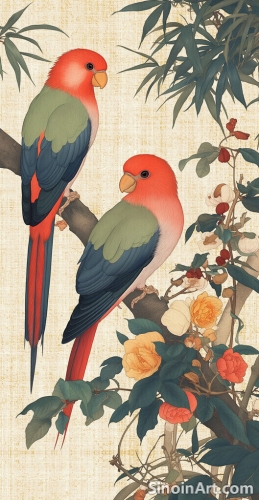 Gongbi paintings often tell stories through the use of a series of interconnected scenes, each carefully rendered to capture a particular moment in the narrative. The use of visual sequencing helps the viewer to understand the story in a structured way. The artist will often guide the viewer's eye across the composition through the placement of figures and objects. 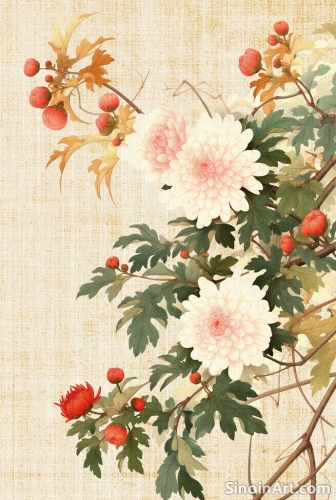 The characters in Gongbi storytelling paintings are often depicted with great detail, their clothing, accessories, and expressions serving to communicate their roles and personalities. The artist's portrayal of character is critical to the interpretation of the story. Every detail contributes to the narrative being told in the painting.  The use of symbolism also plays an important role in conveying the meaning and message of the story. Flowers, birds, animals, and other elements are often imbued with symbolic significance, adding layers of interpretation to the visual narrative. The use of symbols creates additional layers of meaning that enrich the story being told. Gongbi artists often use elaborate architectural settings and detailed landscapes to create a sense of place and context for their stories. The settings help to enhance the overall mood and atmosphere of the narrative, immersing the viewer in the world of the story. The environment plays a critical role in setting the scene and atmosphere for the story. Ultimately, Gongbi painting serves as a powerful visual medium for storytelling. It allows artists to bring to life complex narratives, conveying not only the plot, but also the underlying themes, emotions, and cultural values. The combination of art and story allows the viewer to experience the work on both visual and intellectual levels. |
Tag : Gongbi storytelling, narrative art, Chinese art stories, visual storytelling, art and literature
Related information
- Famous Gongbi Artists: Masters of the Brush
- The Delicate World of Gongbi: An Introduction
- Gongbi vs. Xieyi: Contrasting Styles in Chinese Art
- Gongbi Painting and its Relationship to Calligraphy
- Gongbi and the Depiction of Water: Flow, Reflection, and Atmosphere
A profile of influential Gongbi artists throughout history, highlighting their contributions and styles.
This article introduces Gongbi painting as a precise and detailed art form within Chinese traditional art, highlighting its techniques, historical themes, materials, and contemporary relevance.
A comparison of Gongbi and Xieyi painting styles, highlighting their contrasting techniques, philosophies, and artistic intentions.
This article examines the interconnected relationship between Gongbi painting and Chinese calligraphy, highlighting their shared techniques, the importance of line and ink, the concept of qi, and how the study of calligraphy can enhance the skills of a Gongbi artist.
The depiction of water, with all its fluidity, dynamism, and reflective qualities, is a significant element in many Gongbi paintings. Artists employ a variety of techniques to capture the movement, texture, and atmospheric effects of water, ranging from still ponds and meandering streams to rushing waterfalls and expansive seas. The depiction of water is often a central element of a successful composition, adding depth and beauty to a piece.