Gongbi Painting and its Relationship to Calligraphy
|
Gongbi painting and Chinese calligraphy, while distinct art forms, share a deep and interconnected relationship. Both rely on the use of brushes, ink, and paper, and both place a strong emphasis on the quality and control of lines. This shared technical foundation and the common cultural heritage create a powerful link between these two traditional art forms.  The importance of line is paramount in both Gongbi painting and calligraphy. In Gongbi, the “gougou” outlining method relies on precise and controlled lines, similar to how calligraphers execute their strokes. The ability to vary line thickness, pressure, and direction is crucial for both art forms. The emphasis on controlled brushwork is a common skill that is essential for both disciplines. 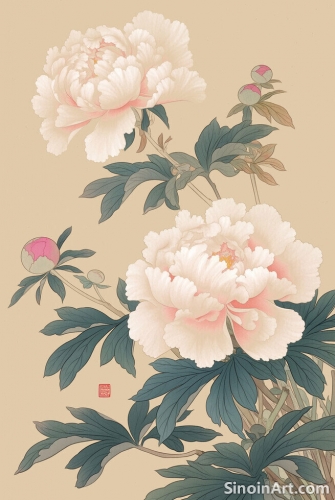 The use of ink is another element that connects calligraphy and Gongbi painting. The quality of the ink, its density, and its application are important for both forms of expression. The preparation of ink, often involving grinding an inkstick on an inkstone, is a shared ritualistic process. Both artists rely on the understanding of the ink to achieve the desired effects.  The concept of qi, or vital energy, is central to both calligraphy and Gongbi. Both forms are considered to be not merely visual representations but also expressions of the artist's inner energy and spirit. The control of the brush, the flow of the ink, and the overall composition reflect the qi of the artist and creates a sense of dynamism and vitality within the work. The study of calligraphy is often considered an essential step in the training of a Gongbi artist. The discipline and skill in controlling brushwork that is developed through calligraphy practice directly translates to the painting process. Mastering the principles of calligraphy enhances the artistic expression in Gongbi. This training fosters both skill and appreciation for both art forms. The interplay between calligraphy and Gongbi painting extends beyond mere technical similarities. The shared cultural context and the underlying aesthetic principles create a powerful synergy. The practice of calligraphy helps to hone the aesthetic sensibilities necessary to appreciate both calligraphic works and the intricate details found in Gongbi. The connection between these forms is a testament to the depth and interconnected nature of Chinese art. |
Tag : Gongbi and calligraphy, Chinese calligraphy, brushwork in calligraphy, ink in art, relationship between art forms
Related information
- Learning Gongbi: Resources and Pathways for Aspiring Artists
- Gongbi and the Court: Patronage and Artistic Standards in Imperial China
- The Materials of Gongbi: A Closer Look at Tools and Pigments
- Gongbi and the Use of Stippling and Pointillism Techniques
- Commissioning a Gongbi Painting: What You Need to Know
This article provides an overview of resources and pathways for aspiring Gongbi artists, including formal education, online resources, private instruction, and the importance of consistent practice.
The history of Gongbi painting is intrinsically linked to the imperial courts of China, where it flourished under the patronage of emperors and the elite classes. The demand for highly detailed and realistic depictions of the natural world and court life led to the development of the meticulous techniques and refined aesthetic characteristic of the Gongbi tradition. This patronage significantly shaped the evolution and preservation of this distinctive style.
This article provides a detailed overview of the materials used in Gongbi painting, including rice paper, Chinese brushes, inksticks, and natural mineral pigments, emphasizing the importance of these traditional elements to the art form.
This article explores the use of stippling and pointillism techniques in Gongbi painting, highlighting how the careful application of dots or points of color creates unique textures, visual effects, and expands the range of expression within this traditional art form.
This article provides a guide for those interested in commissioning a Gongbi painting, highlighting the importance of clear communication, artist selection, understanding the process, setting realistic timelines, and managing budget expectations.