The Delicate World of Gongbi: An Introduction
|
Gongbi, often translated as "meticulous" or "fine-line" painting, represents a significant and distinctive genre within traditional Chinese art. Unlike the more expressive and free-flowing styles of literati painting (xieyi), Gongbi focuses on precise brushstrokes, detailed representation, and vibrant colors. This intricate art form, which has deep historical roots, captures the beauty and complexity of the natural world, human figures, and historical narratives with remarkable skill and patience. It's a meticulous practice demanding rigorous training, keen observation, and a profound understanding of traditional materials and techniques. 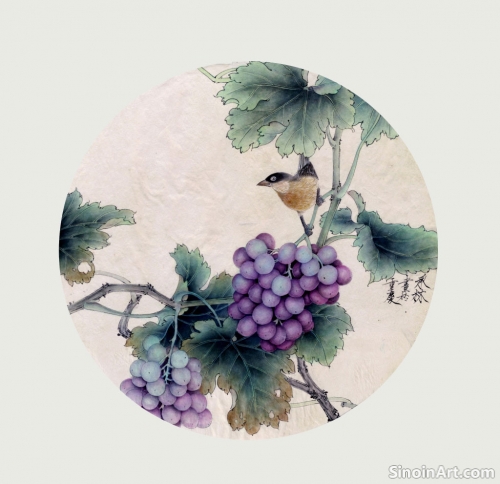 The hallmark of Gongbi lies in its commitment to realistic detail. Artists use fine brushes, often made from wolf hair, to delineate every petal, feather, or facial feature with astounding precision. This process is not merely about replication; it's about capturing the essence and spirit of the subject matter. Each line is purposeful, contributing to the overall harmony and balance of the composition. The application of color is equally precise, with multiple layers of thin washes used to achieve subtle gradations and luminous effects. The vibrancy of these colors, often derived from natural minerals and pigments, is a defining feature of Gongbi.  Historical subjects, often drawn from folklore and mythology, feature prominently in Gongbi art. These works are not just visual representations but also narratives, offering glimpses into Chinese history and culture. The figures are often depicted with elegant poses, their clothing and accessories rendered with meticulous care. Landscapes also take center stage, with plants, animals, and rocks depicted with botanical and geological accuracy. Gongbi artists often create highly complex compositions, weaving together elements of flora, fauna, and architecture into captivating and detailed scenes. 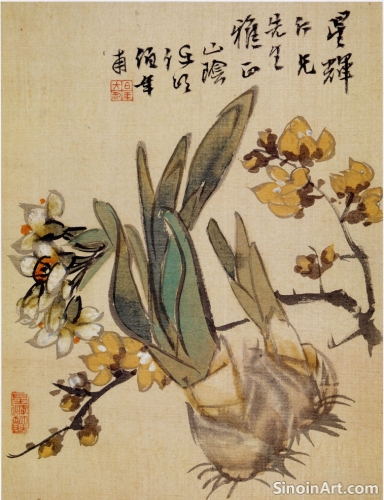 The materials and tools used in Gongbi painting are integral to the finished product. Rice paper, often specially treated for painting, forms the support for the artwork. Chinese brushes, each with different characteristics and sizes, are essential for controlling the application of ink and color. Inksticks, ground with water on an inkstone, provide the essential black pigment. Natural pigments, such as malachite for green, azurite for blue, and vermilion for red, are carefully prepared and applied in multiple layers, creating rich and complex tones. The careful combination of these traditional materials and techniques contribute to the unique and sophisticated aesthetic of Gongbi. Today, Gongbi painting continues to evolve while maintaining its traditional roots. Contemporary artists are exploring new subjects and perspectives, pushing the boundaries of the art form while honoring its historical legacy. This evolution ensures that Gongbi remains a vibrant and relevant art form for both Chinese and international audiences. Understanding the meticulous techniques and profound artistry of Gongbi provides valuable insights into the rich tapestry of Chinese art history and cultural expression. |
Tag : Gongbi painting, Chinese art, meticulous painting, fine-line painting, traditional Chinese art
Related information
- Gongbi Painting and Its Cultural Significance in China
- Gongbi Painting and the Four Gentlemen: Symbolism in Nature
- The Role of Line in Gongbi: The Foundation of Precision
- The Influence of Western Art on Contemporary Gongbi Painting
- Learning Gongbi: Resources and Pathways for Aspiring Artists
This article explores the cultural significance of Gongbi painting in China, highlighting its historical importance, its role in reflecting cultural values, its connection to nature, its emphasis on discipline, and its continued relevance in modern Chinese society.
Explores the symbolism of the Four Gentlemen (plum blossom, orchid, bamboo, chrysanthemum) in Gongbi painting, highlighting their cultural significance and representation.
Explores the critical role of line in Gongbi painting, detailing different types of lines and their contribution to the precision and expressiveness of the art.
This article explores the influence of Western art on contemporary Gongbi painting, highlighting the adoption of new perspectives, compositions, materials, techniques, and themes, and how these influences have created a unique hybrid style.
This article provides an overview of resources and pathways for aspiring Gongbi artists, including formal education, online resources, private instruction, and the importance of consistent practice.