Gongbi and the Use of Stippling and Pointillism Techniques
|
While Gongbi painting is primarily associated with fine linework and smooth color washes, artists also occasionally incorporate stippling and pointillism techniques to create a specific visual effect or suggest texture. These techniques, often involving the application of small dots or points of color, add another layer of complexity to the art form. The addition of these techniques creates a visual texture that sets the art apart. 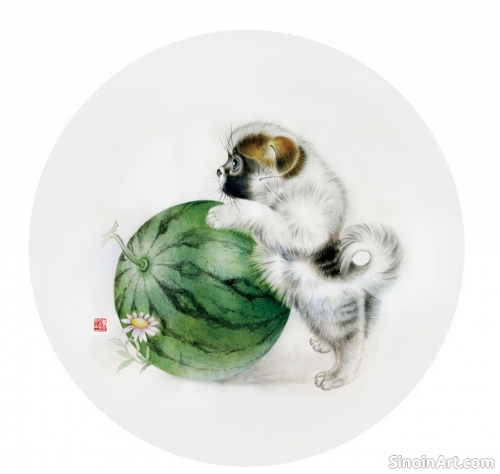 The use of stippling and pointillism techniques in Gongbi is often subtle and controlled, rather than the bold and sweeping approach often seen in Western art forms. The dots of color are typically small and carefully placed, and are meant to work with the other elements of the piece.  The precise application of stippling and pointillism techniques in Gongbi often helps to create a sense of texture, simulating the roughness of a surface or the dappled effect of light filtering through leaves. The careful placement of the dots is used to create a visual texture that enhances the realism of the scene.  The use of these techniques is often reserved for specific areas within the painting where the artist wishes to draw particular attention or add visual complexity. The areas using these techniques are usually smaller and serve to emphasize a specific aspect of the work. These techniques often are used to highlight specific textures that would otherwise be difficult to portray. The techniques allow the artist to more clearly define the texture of specific objects or surfaces within the work. While not a traditional part of Gongbi, stippling and pointillism offer contemporary artists an opportunity to experiment with new techniques and expand the visual language of the art form. The addition of these techniques adds another way for contemporary artists to explore and push the boundaries of the art form. |
Tag : Stippling in art, pointillism, texture techniques, Gongbi brushwork, dot techniques
Related information
- Gongbi Painting and the Art of Storytelling
- Gongbi Painting and the Concept of "Shanshui"
- The Materials of Gongbi: A Closer Look at Tools and Pigments
- The Legacy of Gongbi: Ancient Roots and Modern Blossoming
- The Use of White Space in Gongbi Composition
This article explores the use of Gongbi painting as a medium for storytelling, highlighting the use of detailed scenes, character portrayal, symbolism, settings, and how these elements bring narratives from history, mythology, literature, and everyday life to visual form.
This article explores the relationship between Gongbi painting and the concept of "Shanshui," highlighting the presence of core Shanshui principles, such as the balance of yin and yang, the detailed rendering of nature, and the integration of humans into the natural order within Gongbi landscapes.
This article provides a detailed overview of the materials used in Gongbi painting, including rice paper, Chinese brushes, inksticks, and natural mineral pigments, emphasizing the importance of these traditional elements to the art form.
This article explores the history and legacy of Gongbi painting, from its origins in the Tang Dynasty to its evolution through the Song and subsequent dynasties, and its current resurgence in contemporary art.
This article explores the importance of white space in Gongbi composition, highlighting its role in defining the main subject, creating depth, contributing to overall balance, and reflecting the philosophical principles of emptiness and the interplay of yin and yang.