The Legacy of Gongbi: Ancient Roots and Modern Blossoming
|
Gongbi painting, with its roots stretching back to ancient China, represents a remarkable continuity of artistic tradition. Its evolution over centuries reflects the shifting cultural values and aesthetic sensibilities of different dynasties, while always remaining true to its core principles of detail, precision, and symbolic depth. From imperial court art to a celebrated contemporary practice, Gongbi's legacy is one of adaptability and enduring artistic power. 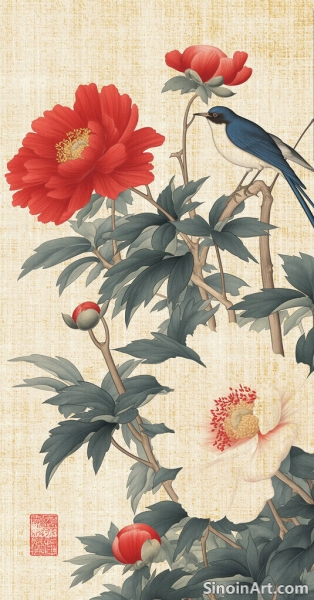 The origins of Gongbi painting can be traced to the Tang Dynasty (618-907 CE), a period marked by a flourishing of cultural and artistic expression. During this time, Gongbi was primarily used for court paintings, depicting emperors, nobles, and scenes of palace life. The emphasis was on capturing the opulence and splendor of the royal court with meticulous detail and realistic representation. These early examples demonstrate the technical virtuosity that would later define the style. 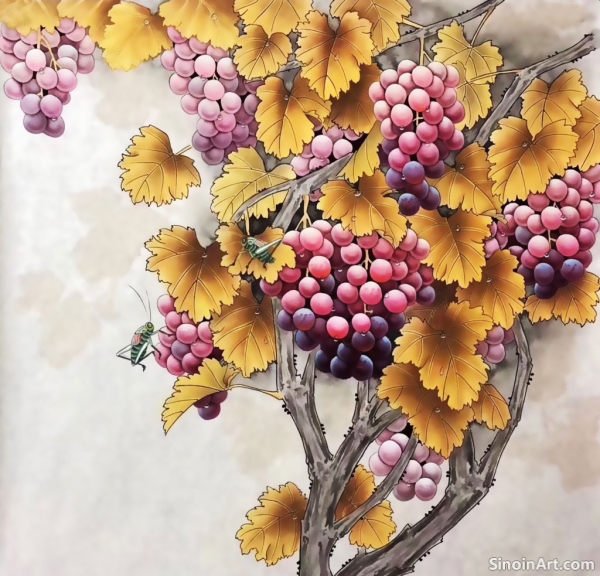 The Song Dynasty (960-1279 CE) is often considered the golden age of Gongbi painting. During this period, the style reached its technical peak, particularly in the depiction of birds and flowers. Artists of this era demonstrated an unparalleled level of skill in capturing the delicate beauty and minute details of the natural world. Their paintings are not mere reproductions of nature but rather imbued with a sense of harmony and inner life. 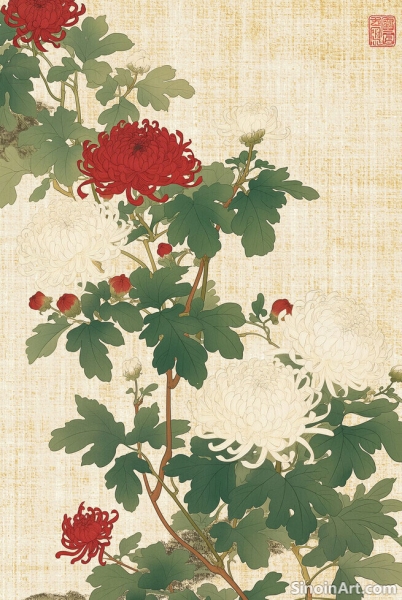 During subsequent dynasties, the Yuan, Ming, and Qing, Gongbi painting continued to evolve, incorporating new subject matter and techniques. While each dynasty had its own stylistic preferences, the underlying principles of meticulous detail and layering remained consistent. The Qing dynasty, in particular, saw a rise in popularity of court paintings and portraits done in the Gongbi style. In the modern era, Gongbi painting has experienced a significant revival, with artists exploring new avenues while maintaining the integrity of the traditional technique. Contemporary Gongbi artists are incorporating modern themes, human subjects, and abstract concepts into the meticulously detailed style, pushing the boundaries of what this ancient art form can express. The rise of interest and study of Gongbi globally has further solidified the legacy of this powerful art form. The enduring legacy of Gongbi painting lies in its ability to adapt and evolve while maintaining its unique character. This intricate and captivating art form stands as a testament to the skill and dedication of generations of Chinese artists. It continues to fascinate and inspire people from all over the world, bridging the gap between ancient tradition and contemporary artistic expression. |
Tag : Gongbi Painting History, Chinese Art Legacy, Traditional Art Evolution, Song Dynasty Painting, Contemporary Gongbi Art
Related information
- Gongbi Painting and the Use of "Boneless" Technique
- Gongbi and the Use of Stippling and Pointillism Techniques
- Gongbi and the Depiction of Water: Capturing the Flow and Spirit
- Gongbi Painting and the Influence of Chinese Poetry
- Gongbi Portraiture: Capturing the Essence of the Subject
This article explores the “boneless” technique (没骨法) in Gongbi painting, highlighting how artists use color washes to create forms without preliminary outlines, adding softness, fluidity, and demonstrating a versatility within the art form.
This article explores the use of stippling and pointillism techniques in Gongbi painting, highlighting how the careful application of dots or points of color creates unique textures, visual effects, and expands the range of expression within this traditional art form.
This article explores the depiction of water in Gongbi painting, highlighting the techniques used to capture its flow and movement, the use of color to suggest its depth, symbolic significance, and how it enhances the overall sense of harmony and balance within the artwork.
This article explores the influence of Chinese poetry on Gongbi painting, highlighting the shared themes, imagery, and symbolic language, and how this connection enhances the literary and artistic impact of the artwork.
This article explores Gongbi portraiture, highlighting its meticulous detail, precise use of line, delicate color layering, and its aim to capture not only the physical likeness of the subject but also their inner character and essence.