Famous Xieyi Artists: Masters of the Spontaneous Brush
|
Throughout history, numerous artists have pushed the boundaries of Xieyi painting, each leaving their distinct mark on this expressive art form. Studying the works of these renowned masters provides invaluable insights into the history, techniques, and philosophies of Xieyi. Their contributions have shaped the development of the style and continue to inspire contemporary artists today. 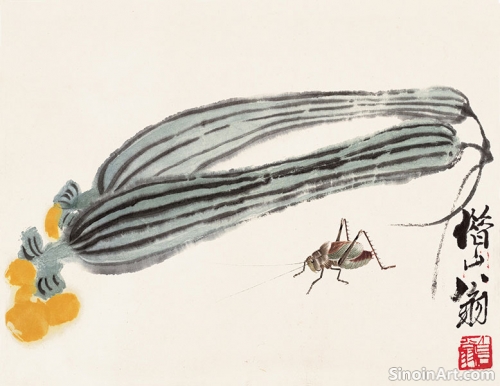 One of the most celebrated Xieyi artists of the Ming Dynasty was Xu Wei (1521-1593), renowned for his bold, unrestrained brushwork and his ability to capture the essence of his subjects with a few strokes. His works, often featuring flowers, birds, and bamboo, are a testament to the power of expressive brushwork and the embodiment of the Xieyi philosophy. 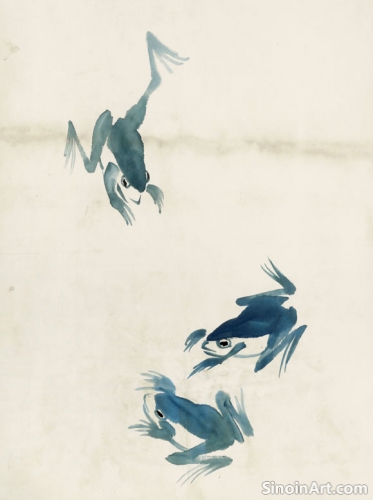 Bada Shanren (1626-1705), a painter of the Qing Dynasty, was known for his highly individual style, characterized by distorted forms, eccentric compositions, and a deep sense of personal expression. His paintings reveal a unique artistic vision and reflect his profound understanding of the philosophy of Xieyi. He pushed the boundaries of tradition while staying true to its core philosophy. 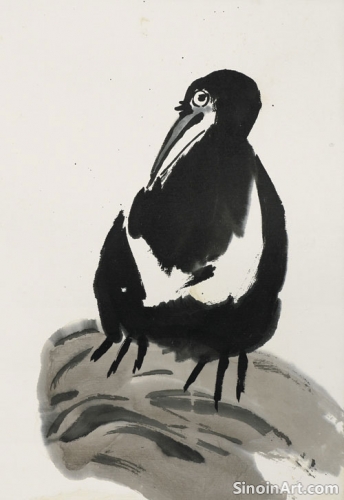 Qi Baishi (1864-1957), a 20th-century master, was renowned for his vibrant and expressive depictions of everyday life. His use of bold colors, simplified forms, and playful compositions made him one of the most beloved artists of modern China. His style is now highly recognized around the world. Zhang Daqian (1899-1983) was a versatile artist who excelled in both Gongbi and Xieyi styles. His landscape paintings, characterized by their dynamic compositions and expressive use of ink, demonstrate his mastery of the Xieyi techniques and their ability to capture the essence of nature. He had the unique skill of applying the techniques to his landscapes, creating dynamic artwork. By studying the lives and works of these famous Xieyi artists, one can gain a deeper appreciation for the rich history and enduring power of this spontaneous art form. Their work serves as an inspiration and a guide for aspiring Xieyi artists, encouraging them to embrace freedom, spontaneity, and personal expression. The impact they made on the art form is enduring and highly regarded. |
Tag : Famous Xieyi Artists, Chinese Art Masters, Ming Dynasty Painters, Qing Dynasty Art, Modern Chinese Artists
Related information
- The Use of "Multiple Brushstrokes" in Xieyi
- Xieyi Painting and the Concept of "Qi Yun"
- The Connection Between Xieyi and Chinese Gardens
- The History and Evolution of Xieyi
- Key Techniques in Xieyi Brushwork
"Multiple Brushstrokes" (cūn fǎ) are essential in Xieyi landscape painting, offering a variety of textured strokes that create a sense of depth, form, and visual complexity, requiring skill and strategic layering to depict mountains, rocks, and trees, adding dynamism and guiding the viewer’s eye through the composition.
Qi yun (spirit resonance) is a central aesthetic principle in Xieyi painting, referring to the overall sense of energy, movement, and vitality that emanates from the artwork, achieved through the artist's connection with their subject, spontaneity, and inner energy, and sensed by the viewer.
Xieyi painting and traditional Chinese gardens share a focus on naturalness, harmony, strategic use of negative space, and asymmetry, both creating microcosms of nature that foster contemplation, reflection, and a deeper connection to nature and the human spirit, displaying shared design principles and underlying goals.
Xieyi painting evolved from the Song Dynasty literati tradition through subsequent dynasties, with key figures like Xu Wei, Qi Baishi, and Pan Tianshou contributing to its development, and continuing to influence contemporary artists.
Key techniques in Xieyi painting include line drawing, splashing ink (Pomo), dry brush work, the control of ink washes, and the strategic use of negative space, each contributing to the expressive power of the artwork.