Bronze Ware and the Representation of Power in Ancient Chinese Royal Courts
|
Bronze ware played a vital role in representing power and authority in ancient Chinese royal courts, used in ceremonies, displays of wealth, and as tools for maintaining social hierarchies. The careful use and arrangement of bronze artifacts helped to communicate clear messages about power and status. The use of bronze in royal courts helped to solidify both their political and social control. 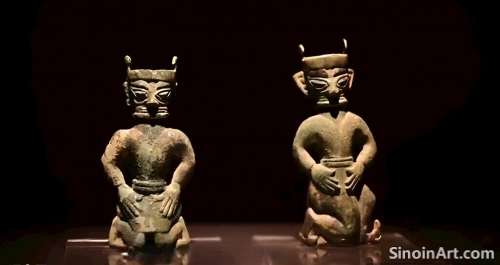 Bronze vessels, often used in lavish banquets, court ceremonies, and ancestral rites, were key symbols of royal authority, with their size, quality, and decoration reflecting the power and prestige of the ruler and his court. The presence of these finely crafted and deeply symbolic pieces emphasized the wealth and status of the royal class. The integration of these artifacts into court life helped to establish a sense of order and grandeur.  Bronze instruments, such as bells and drums, were used to accompany court performances, further enhancing the opulence and symbolic weight of these events, and emphasizing the power and authority of the ruling class. The use of music and the visual presence of these instruments helped to create a unique and highly structured setting for royal ceremonies and festivals.  The control over bronze resources, and the skills needed to make these pieces, further solidified the power and authority of the ruling class, setting them apart from the rest of society. The management of bronze production helped the rulers to reinforce both their social and political power. The study of bronze ware in the context of royal courts helps to illuminate the complex interplay between material culture, power, and the representation of authority in ancient Chinese civilization. The careful design and management of these objects reveals much about the beliefs and values of the era. |
Tag : bronze royal courts, ancient Chinese power, imperial symbols, court rituals, bronze authority
Related information
- Bronze Ware and Ancient Chinese Conceptions of Time: Cycles, Rituals, and Cosmic Order
- The Use of Bronze in Ancient Chinese Maritime Activities: Navigation, Trade, and Exploration
- The Legacy of Chinese Bronze Ware: Its Influence on Later Art Forms
- The Influence of Tang Dynasty Culture on the Design and Decoration of Bronze Ware
- The Use of Bronze in Ancient Chinese Water Control: Dams, Canals, and Irrigation Systems
This article explores the connection between bronze ware and ancient Chinese conceptions of time, highlighting its role in creating timekeeping devices, marking ritual cycles, and revealing a worldview that emphasized the importance of understanding the cosmos and its patterns.
This article explores the use of bronze in ancient Chinese maritime activities, highlighting its role in creating ship fittings, navigational tools, and its impact on the development of trade routes and maritime exploration.
This article explores the enduring legacy of Chinese bronze ware, highlighting its influence on later forms of Chinese art, including ceramics, painting, and sculpture, with particular emphasis on the enduring impact of bronze forms, motifs, and aesthetic principles.
This article explores the influence of Tang Dynasty culture on bronze ware, highlighting new forms, decorative techniques, and their shift toward more refined and elegant designs that reflect the style of the period, and its focus on elegance and beauty.
This article explores the use of bronze in ancient Chinese water control systems, highlighting its role in creating durable components for dams, canals, and irrigation networks, and demonstrating its importance for agricultural development and water management.