Bronze Ware and the Development of Ancient Chinese Writing Systems
|
The evolution of Chinese writing systems was closely intertwined with the production and use of bronze ware, with many of the earliest forms of writing found inscribed on bronze objects. These inscriptions provide invaluable insights into the development of written Chinese and the relationship between text and ritual. The study of these texts helps to illuminate a rich period of artistic and technological innovation.  Early bronze inscriptions, known as jinwen, often included simple ideographs and pictorial representations of objects and concepts. These simple forms were the basis from which later more complex forms of writing would develop. 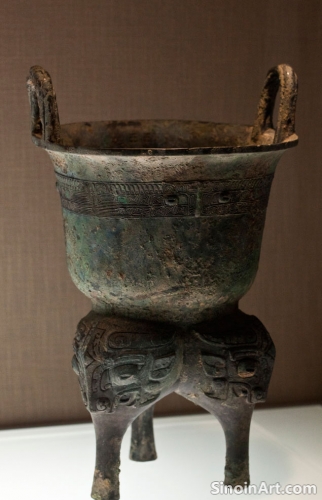 The evolution of writing styles is clearly visible in the changing forms of bronze inscriptions, from the early archaic script to the more standardized forms of later periods. The development of the written language is clearly visible in these bronze inscriptions. 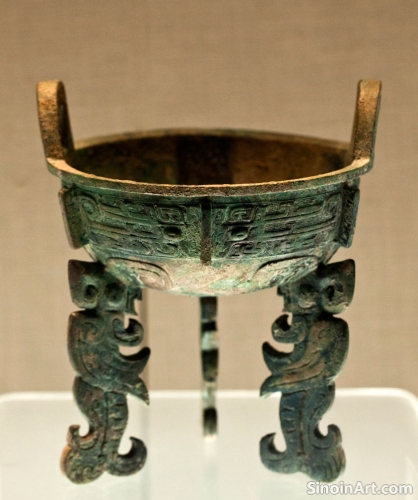 The creation of written language on bronze objects also reflects a growing need to record important information, laws, and cultural practices, as the use of bronze became increasingly important for codifying ideas and traditions. The development of the writing system was an important component of the development of Chinese culture. The study of bronze inscriptions has played a crucial role in the understanding of ancient Chinese writing, allowing us to trace its evolution and to better understand the origins of Chinese script. The careful study of these texts helps to bring to light details of ancient Chinese culture and its relationship to the written word. |
Tag : bronze inscriptions writing, Chinese writing systems, jinwen, script evolution, ancient languages
Related information
- The Use of Bronze in Ancient Chinese Maritime Activities: Vessels and Tools
- The Inscribed Bronzes of the Zhou Dynasty: Narratives of History and Power
- The Evolution of Bronze Decoration: From Simple Lines to Complex Narratives
- Bronze Mirrors and Ancient Chinese Beliefs About the Soul: Reflection and Transformation
- Regional Styles of Bronze Ware: Exploring the Diversity of Ancient China
This article explores the use of bronze in ancient Chinese maritime activities, highlighting its role in ship construction, the creation of navigational and fishing tools, and its contribution to the development of trade and exploration.
This article explores the inscribed bronzes of the Zhou Dynasty, emphasizing their importance as historical records, their role in establishing lineage and political legitimacy, and their significance in the development of Chinese writing.
This article explores the evolution of bronze decoration, highlighting the shift from simple geometric patterns to more complex motifs and narratives, showcasing the technical and artistic development of ancient Chinese bronze workers.
This article explores the connection between bronze mirrors and ancient Chinese beliefs about the soul, highlighting their role as guides in the afterlife, their association with spiritual transformation, and the belief that they could capture and preserve the soul's essence.
This article explores regional styles of bronze ware in ancient China, highlighting the distinct forms, designs, and techniques found in different areas, including the Central Plains, the Yangtze Valley, and the northern regions, revealing the diversity of ancient Chinese culture.