The Evolution of Bronze Decoration: From Simple Lines to Complex Narratives
|
The decorative styles on Chinese bronze ware evolved dramatically over time, from the simple, geometric lines of early pieces to the more elaborate and narrative scenes found on later bronzes. This evolution is a testament to the creativity and technical skill of ancient Chinese artisans. The development of the decorative arts help us to better understand the history and culture of ancient China. 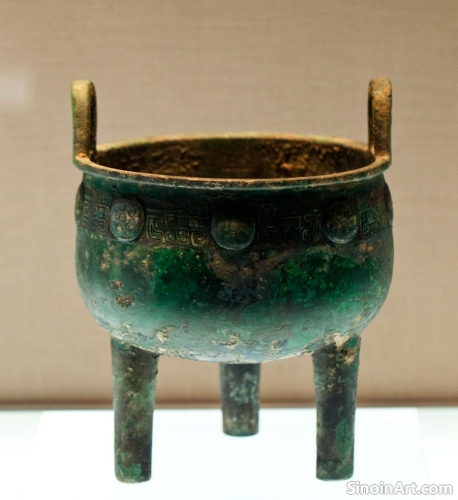 Early bronze decoration often consisted of simple, geometric patterns, including lines, circles, and spirals, applied either directly to the bronze or via the casting process. The emphasis on geometric forms was a defining characteristic of the early bronze style. These patterns often expressed a sense of order and structure in the design.  As casting techniques progressed, more complex and intricate patterns emerged, including the taotie motif and other zoomorphic designs, which often held strong symbolic and spiritual meanings. The inclusion of new symbols and patterns reveals changes in the culture and beliefs of the people who produced these objects. 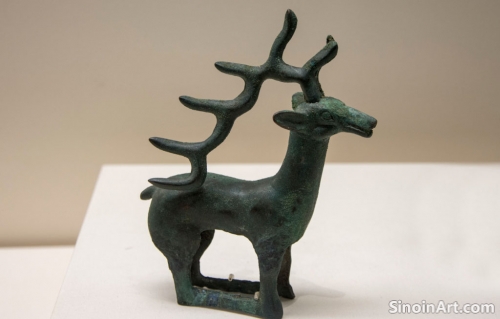 Later bronze decoration often featured entire scenes from mythology, legends, and daily life, which were used to create more detailed and nuanced designs. The inclusion of these scenes helped to transform bronze objects from mere functional items to powerful storytelling tools. The study of bronze decoration helps to reveal the evolution of ancient Chinese art and beliefs, highlighting a complex tapestry of styles and symbolism that spanned centuries of artistic innovation. The development of decorative techniques provides a valuable window into the history of ancient Chinese art. |
Tag : bronze decoration, Chinese art history, ancient motifs, decorative techniques, artistic evolution
Related information
- Bronze Ware and the Representation of Authority: Imperial Symbols and Power
- The Legacy of Zhou Dynasty Bronzes: Shaping Later Chinese Ritual and Culture
- The Future of Chinese Bronze Ware: New Discoveries, Research, and Interpretations
- The Enduring Legacy of Bronze Ware: A Bridge Between Ancient and Modern China
- The Use of Bronze in Ancient Chinese Maritime Activities: Vessels and Tools
This article explores the representation of authority in Chinese bronze ware, highlighting the use of symbols, emblems, weapons, and other objects to demonstrate imperial and elite power, and the connections between material culture, political ideology, and the assertion of control.
This article explores the lasting legacy of Zhou Dynasty bronzes, highlighting their influence on later Chinese ritual practices, their impact on subsequent artistic designs, their role in the development of historical records, and their contribution to a continued reverence for tradition.
This article explores the future of Chinese bronze ware studies, highlighting the potential for new discoveries, the use of advanced scientific techniques, new theoretical approaches, and how ongoing research will continue to enrich our understanding of these remarkable artifacts.
This article reflects on the enduring legacy of Chinese bronze ware, emphasizing its continuing influence on art and culture, its role as a bridge between ancient and modern China, and the importance of preserving these invaluable treasures for future generations.
This article explores the use of bronze in ancient Chinese maritime activities, highlighting its role in ship construction, the creation of navigational and fishing tools, and its contribution to the development of trade and exploration.