Bronze Ware and the Development of Ancient Chinese Technology: Innovation and Practical Applications
|
Beyond its aesthetic value, bronze played a crucial role in the development of ancient Chinese technology, used in various implements, devices, and systems that enhanced daily life, agricultural practices, and military capabilities. The study of bronze artifacts helps to illuminate the ingenuity of ancient Chinese artisans and their technological prowess. The practical use of bronze highlights the technological and scientific achievements of the ancient world. 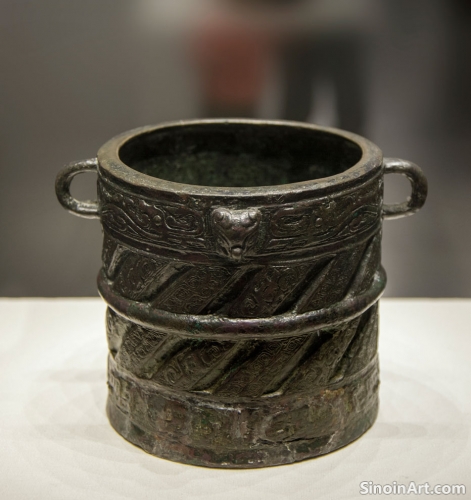 Bronze was used to create a variety of agricultural tools, such as plows, hoes, and sickles, which were more durable and effective than tools made from other materials, helping to increase agricultural productivity and efficiency. The use of these tools helped to enhance the economic output of the agricultural regions. These developments helped to support the population growth and overall prosperity of the region.  Bronze was also used in the development of irrigation systems, with the use of bronze pipes, valves, and other hydraulic components helping to manage water resources for agriculture, and also for the daily life needs of cities and large population centers. The use of bronze made the water management systems more efficient and more reliable. 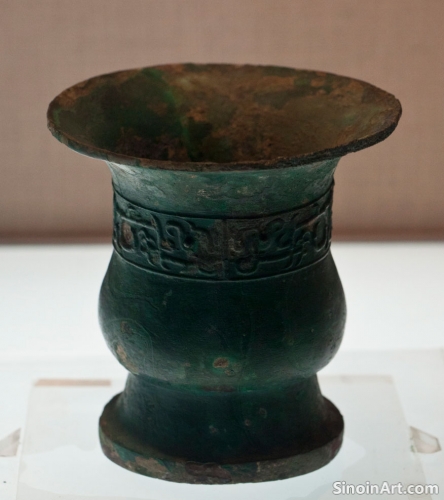 Bronze was essential in the creation of more effective weaponry and also for the creation of better and more sophisticated tools. Bronze was a versatile material that helped to promote innovation and to facilitate advancements in a variety of fields. The technological innovations of this era helped to create a powerful and wealthy society. The study of bronze and its connection to technological development reveals the ingenuity and innovation of ancient China, demonstrating the intertwining of artistic expression, technical skill, and practical needs. The objects created during this era reveal a deep understanding of materials science and also show the importance of combining form with function. |
Tag : bronze technology, Chinese innovation, ancient tools, agricultural implements, hydraulic engineering
Related information
- The Development of Bronze Mirrors in the Han Dynasty: New Styles and Social Significance
- The Impact of Bronze Ware on Ancient Chinese Burial Customs: Ritual Objects and the Afterlife Journey
- The Evolution of Bronze Decoration: From Simple Lines to Complex Narratives
- The Influence of Bronze Ware on the Development of Chinese Seal Carving
- Bronze Ware and the Development of Ancient Chinese Mathematics: Measurement and Calculation
This article explores the development of bronze mirrors in the Han Dynasty, highlighting new styles, complex designs, their incorporation of cosmology, their role as status symbols, and the insights they offer into Han society.
This article explores the impact of bronze ware on ancient Chinese burial customs, highlighting their role as grave goods, their connection to beliefs about the afterlife, and how they reflect the status and spiritual needs of the deceased.
This article explores the evolution of bronze decoration, highlighting the shift from simple geometric patterns to more complex motifs and narratives, showcasing the technical and artistic development of ancient Chinese bronze workers.
This article explores the influence of bronze ware on the development of Chinese seal carving, highlighting the shared techniques, the stylistic similarities, the transmission of decorative motifs, and the interconnectedness of these two art forms.
This article explores the use of bronze in ancient Chinese mathematics, highlighting its role in creating measuring instruments, illustrating mathematical principles, and revealing the connections between bronze, technology, and mathematical understanding.