Bronze Ware and the Development of Ancient Chinese Music Theory: The Use of Scales, Intervals, and Tuning
|
The creation and use of bronze musical instruments in ancient China played a crucial role in shaping the development of music theory, with the precise tuning and arrangement of bells, chimes, and other instruments leading to a better understanding of scales, intervals, and harmonic relationships. The close interplay between instrument design and musical theory helped to codify the principles of musicality for generations to come. The exploration of scales, intervals, and harmony was enhanced by the precision that was available through the use of bronze in instrument design.  The carefully tuned sets of bronze bells, particularly the bianzhong, allowed ancient musicians to experiment with different melodic and harmonic combinations, leading to a greater awareness of musical patterns and structures. The design and construction of these instruments demonstrates a sophisticated understanding of musical acoustics and also of metalworking techniques. 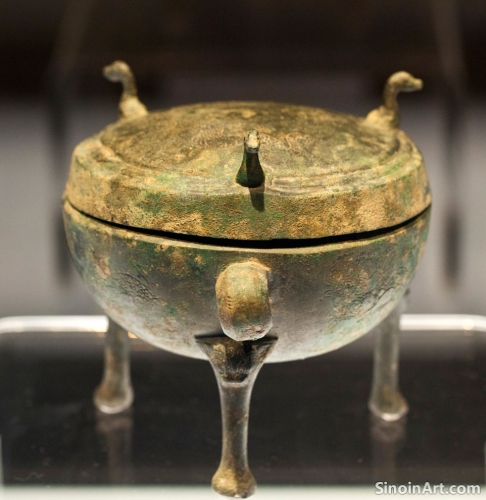 The development of specific scales, modes, and tuning systems was often influenced by the design and construction of bronze instruments, with musicians relying on these instruments to create and perform music. The carefully tuned bells helped to establish a framework for Chinese music theory and practice. 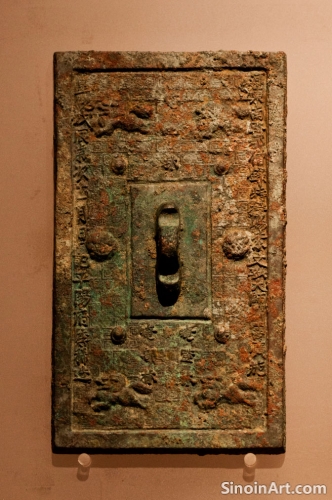 The study of bronze musical instruments and their connection to ancient Chinese music theory helps to illuminate the complex relationship between art, science, and mathematics in shaping the traditions of Chinese music. These instruments helped to establish a firm and enduring foundation for Chinese music. The combination of scientific understanding and artistic creation is a hallmark of ancient Chinese culture. |
Tag : bronze music theory, ancient Chinese scales, instrument tuning, musical intervals, bianzhong
Related information
- The Role of Animal Motifs in Chinese Bronze Ware: Symbolic Creatures of Power and Mystery
- Bronze Ware and the Development of Ancient Chinese Astronomy: Instruments, Charts, and Cosmological Beliefs
- The Influence of Tang Dynasty Kaishu Calligraphy on Bronze Inscriptions
- The Use of Bronze in Ancient Chinese Ritual Practice: Beyond Vessels and Symbols
- Bronze Ware and the Development of Ancient Chinese Ceramics: Form and Decoration
This article explores the animal motifs found on Chinese bronze ware, highlighting the symbolism of creatures like the taotie, dragons, phoenixes, and tigers, revealing their use in conveying power, spirituality, and connections to the natural world.
This article explores the interplay of bronze ware and ancient Chinese astronomy, highlighting the creation of observational tools, the symbolic representation of celestial bodies, and how bronze helped to express ancient beliefs about the universe.
This article explores the influence of Tang Dynasty Kaishu calligraphy on bronze inscriptions, highlighting how its elegant and structured forms impacted the style of carved characters and reflecting the artistic interplay between calligraphy and metalworking.
This article explores the use of bronze beyond vessels and weapons in ancient Chinese ritual practices, highlighting bronze musical instruments, ritual implements, and ceremonial objects, and revealing how these objects played a crucial role in spiritual ceremonies.
This article explores the influence of bronze ware on the development of ancient Chinese ceramics, highlighting the replication of bronze forms and decorative patterns, the adaptation of metalworking techniques, and demonstrating the cross-pollination of these two art forms.