Bronze Ware and the Development of Ancient Chinese Ceramics: Form and Decoration
|
While bronze ware held a unique place in ancient China, its forms, decorative styles, and technical aspects also had a notable influence on the development of Chinese ceramics. The skills and artistry developed in bronze production also greatly influenced the traditions and techniques that were used in the creation of ceramics. The interplay of these two art forms helped to shape their shared history.  Early ceramic vessels often replicated the shapes of bronze ritual objects, including the ding, gui, and zun, demonstrating the lasting impact of bronze forms on later material culture. The use of similar forms helped to suggest a continuity of tradition and a link to the prestige and power of the earlier metal work.  The techniques of decoration, including incised lines, relief patterns, and geometric motifs, were also adapted from bronze ware, with ceramic artists emulating the aesthetic principles of bronze in their own work. The motifs and designs were often carried over from one material to another. The use of similar decorative styles helped to create a sense of continuity and tradition. 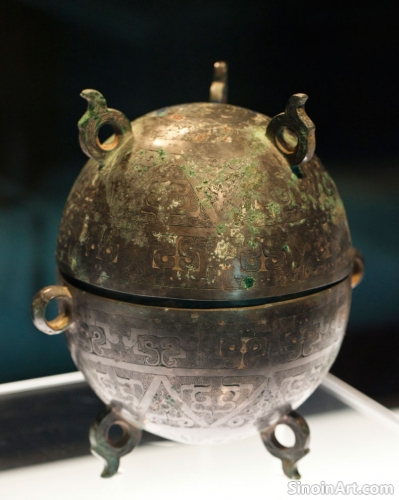 The study of this cross-influence between bronze and ceramics helps us to appreciate the interconnectedness of different art forms in ancient China, as well as the creative and technical innovations that arose from the combination of different styles and materials. The interaction between the two art forms is a key element in understanding their shared history and their impact on Chinese culture. |
Tag : bronze influence ceramics, ancient pottery, Chinese art, ceramic design, shared traditions
Related information
- Bronze Ware and Ancient Chinese Trade: Examining the Role of Material Culture in Economic Exchange
- The Influence of Bronze Ware on Later Ceramic Styles in China
- The Legacy of Chinese Bronze Ware in Contemporary Art and Design: New Interpretations
- Bronze Ware and the Development of Ancient Chinese Music Theory: The Use of Scales, Intervals, and Tuning
- The Future of Bronze Ware Studies: New Research Methods and Technologies
This article explores the role of bronze ware in ancient Chinese trade, highlighting its use as a valuable commodity, its impact on shaping trade routes and market systems, and its contribution to the broader economic landscape of the time.
This article explores the influence of bronze ware on later ceramic styles in China, highlighting the replication of forms, the adoption of bronze motifs, and the impact on technical aspects, demonstrating the lasting impact of bronze on later artistic endeavors.
This article explores the lasting influence of Chinese bronze ware on contemporary art and design, highlighting how artists and designers reinterpret and adapt ancient forms, motifs, and techniques, creating new works that connect the past with the present.
This article explores the influence of bronze ware on the development of ancient Chinese music theory, focusing on how the precise tuning of instruments led to a greater understanding of scales, intervals, harmony, and the overall structure of musical forms.
This article explores the future of Chinese bronze ware studies, highlighting the use of new research methods and technologies, including advanced imaging, 3D modeling, isotopic analysis, and interdisciplinary approaches, which promise to enhance our understanding of these artifacts.