Bronze Ware and the Development of Ancient Chinese Astronomy: Instruments, Charts, and Cosmological Beliefs
|
The intertwined development of ancient Chinese astronomy and the production of bronze ware is a fascinating study in how technological innovation and scientific understanding intersected with artistic expression and cosmological beliefs. Bronze was instrumental not only in creating tools for observation but also as a medium for representing the perceived structure and order of the universe. The use of bronze in the study of astronomy helped to further our understanding of the ancient Chinese perspective on the cosmos.  Bronze was used to create complex and precise astronomical instruments, such as armillary spheres, celestial globes, and sighting devices, which allowed ancient astronomers to map the heavens and to track the movements of celestial bodies with increasing accuracy. The creation of these complex instruments demonstrates the scientific knowledge and technical skills of the ancient world. 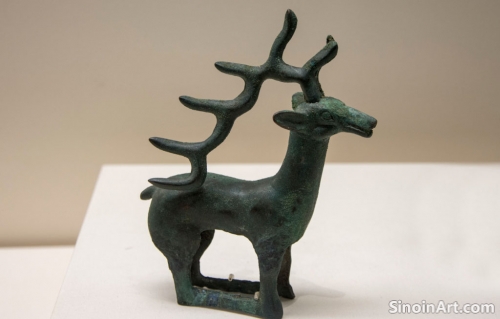 These instruments, often carefully designed to reflect both functionality and beauty, also embodied a deeper understanding of the relationship between the earthly and the heavenly realms, and also the role that humanity plays in this cosmic arrangement. The use of bronze as a medium helped to reflect and communicate complex cosmological ideas. 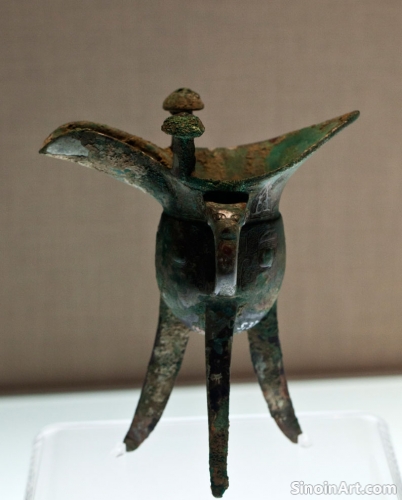 Bronze objects, such as vessels and mirrors, also often included depictions of constellations, the sun, the moon, and other celestial phenomena, highlighting the importance of the cosmos in ancient Chinese culture and thought. The incorporation of these symbols into bronze artifacts helped to emphasize the integration of the spiritual and the scientific. The study of bronze ware and its connection to ancient Chinese astronomy helps to understand the scientific advancements, the unique worldview, and the complex interplay between technology, religion, and the arts in ancient China. The fusion of these different perspectives is a key element in the ancient Chinese approach to understanding the world around them. |
Tag : bronze astronomy instruments, ancient Chinese cosmology, celestial maps, astronomical tools, ancient science
Related information
- Bronze Ware and the Expression of Power in Ancient Chinese Tombs: Wealth, Status, and the Afterlife
- The Influence of Shang Dynasty Bronze Ware on Later Chinese Art Forms: Motifs, Techniques, and Symbolism
- The Future of Bronze Ware Studies: New Research Methods and Technologies
- The Influence of Zhou Dynasty Ritual Bronzes on Later Chinese Art and Culture
- Bronze Weapons of Ancient China: A Glimpse into Warfare and Power
This article explores how bronze ware was used to express power in ancient Chinese tombs, highlighting the connection between the quantity, quality, and arrangement of these objects and the social status of the deceased, as well as beliefs about their afterlife.
This article explores the lasting influence of Shang Dynasty bronze ware on later Chinese art, highlighting the enduring power of the taotie motif, the technical legacy of Shang casting methods, and their impact on subsequent artistic styles and symbolic vocabularies.
This article explores the future of Chinese bronze ware studies, highlighting the use of new research methods and technologies, including advanced imaging, 3D modeling, isotopic analysis, and interdisciplinary approaches, which promise to enhance our understanding of these artifacts.
This article explores the lasting influence of Zhou Dynasty ritual bronzes on later Chinese art and culture, highlighting their impact on forms, designs, the importance of inscriptions, and the continued relevance of ritual and ancestral veneration.
This article explores the bronze weapons of ancient China, highlighting their functional and symbolic importance, the types of weapons, the technical expertise required for their creation, and the insights they provide into early Chinese warfare.