Bronze Ware and the Development of Ancient Chinese Metallurgy: Innovations and Techniques
|
The production of Chinese bronze ware was a complex undertaking that required a deep understanding of metallurgy, with ancient artisans constantly innovating and refining techniques for the extraction, alloying, casting, and decoration of bronze. The ongoing experimentation and innovation in this field helped to make China a center of both technological and artistic excellence. The careful application of science and artistry helped to create an enduring legacy of craftsmanship.  The discovery and use of various metals, including copper, tin, and lead, as well as the creation of the specific alloys needed for different purposes, represents a significant achievement of ancient metallurgy. The proper use of different metals and the creation of new alloys was key to the development of bronze working. The precise management of metal ratios was essential to the production of specific types of bronze. 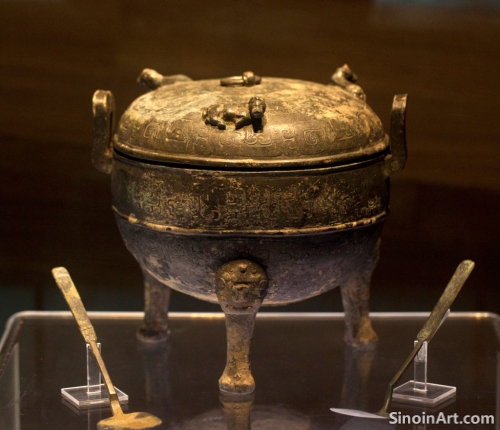 The development of casting techniques, such as the piece-mold and lost-wax methods, allowed for the creation of increasingly complex and detailed bronze objects. These advancements in casting were essential to the evolution of bronze working. The experimentation and innovation in casting techniques is a key element in the development of Chinese metalworking traditions.  The technical and artistic skill required for the creation of bronze ware highlights the ingenuity and mastery of ancient Chinese metalworkers, who were both skilled technicians and highly creative artists. The blending of science, technology, and artistry was a key element in the ancient Chinese approach to metalworking. These techniques are a testament to the skill and ingenuity of the people who developed them. |
Tag : bronze metallurgy, ancient Chinese technology, casting techniques, metal alloys, metalworking skills
Related information
- The Geometric Patterns of Bronze Ware: Order, Harmony, and Cosmic Significance
- The Use of Bronze in Ancient Chinese Public Works: Infrastructure, Irrigation, and City Planning
- The Art of Bronze Casting: Techniques and Innovations in Ancient China
- Bronze Ware and the Representation of Authority: Imperial Symbols and Power
- The Influence of Bronze Ware on the Development of Chinese Seal Carving
This article explores the geometric patterns on Chinese bronze ware, highlighting their role in conveying order, balance, and harmony, and discussing how they reflected an understanding of the universe and the importance of the repeating patterns and cycles found in nature.
This article explores the use of bronze in ancient Chinese public works projects, highlighting its role in surveying, water management, construction, and demonstrating its importance in the development of infrastructure and city planning.
This article explores the art of bronze casting in ancient China, highlighting the development of techniques like piece-mold casting and the lost-wax method, and emphasizing the control of alloys, temperature, and the innovations of ancient metalworkers.
This article explores the representation of authority in Chinese bronze ware, highlighting the use of symbols, emblems, weapons, and other objects to demonstrate imperial and elite power, and the connections between material culture, political ideology, and the assertion of control.
This article explores the influence of bronze ware on the development of Chinese seal carving, highlighting the shared techniques, the stylistic similarities, the transmission of decorative motifs, and the interconnectedness of these two art forms.