The Geometric Patterns of Bronze Ware: Order, Harmony, and Cosmic Significance
|
Beyond figural and animal motifs, geometric patterns played a significant role in the decoration of Chinese bronze ware, conveying a sense of order, balance, and harmony, often associated with a larger understanding of the universe. These patterns were not merely decorative; they were also deeply symbolic. The recurring geometric patterns help to reinforce the ideas of balance, order, and harmony. 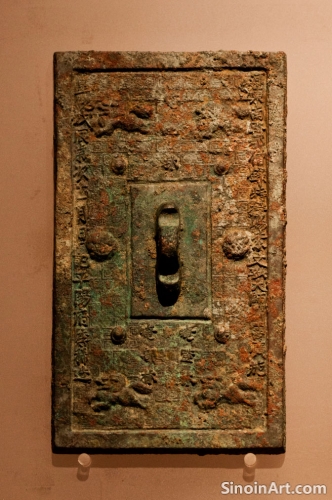 Patterns like spirals, meanders, and concentric circles were often used, reflecting an ancient Chinese understanding of the interconnectedness of all things. The patterns also often suggest a belief in cycles and patterns that repeat and recur in both life and the natural world. The careful design and arrangement of these elements also suggest a belief in the underlying order of the universe. 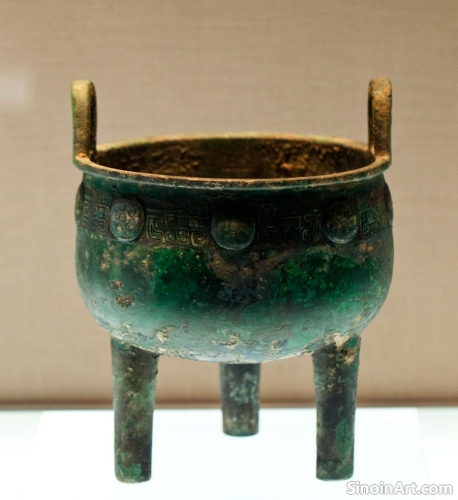 The precise execution of geometric patterns on bronze vessels demonstrates the skill of the craftsmen, and their ability to create visually striking and elegant designs. The ability to precisely render these forms required a great deal of both skill and patience. The underlying structure and harmony of these patterns adds to the overall beauty of the art form. 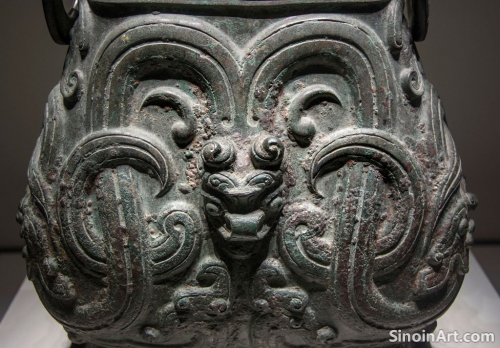 The use of geometric patterns also reflects a belief in the underlying order and harmony of the cosmos, with many of the patterns mirroring the perceived movements of the celestial bodies and the rhythms of nature. The patterns served not only an aesthetic purpose, but they also helped to communicate the cosmological beliefs of the era. The study of geometric patterns on bronze ware provides a fascinating glimpse into the visual language of ancient Chinese art, revealing the complex interplay between design, symbolism, and a desire to express a more coherent vision of the world. The careful study of these geometric forms helps to connect us to the beliefs and values of the people who made them. |
Tag : bronze geometric patterns, Chinese design, ancient symbolism, art motifs, cosmic harmony
Related information
- The Use of Bronze in Ancient Chinese Public Works: Infrastructure, Irrigation, and City Planning
- Bronze Ware and the Transmission of Ancient Chinese Knowledge: Libraries, Archives, and Scholarship
- The Bronze Masks of Sanxingdui: Exploring Ritual, Transformation, and the Unseen Realm
- The Use of Bronze in Ancient Chinese Water Clocks and Timekeeping Devices
- Bronze Ware and Ancient Chinese Astronomy: Celestial Motifs and Interpretations
This article explores the use of bronze in ancient Chinese public works projects, highlighting its role in surveying, water management, construction, and demonstrating its importance in the development of infrastructure and city planning.
This article explores how bronze ware was used in the transmission of knowledge in ancient China, highlighting its role in creating records, tablets, archive labels, and other objects that helped to document, preserve, and disseminate information for future generations.
This article delves deeper into the bronze masks of Sanxingdui, exploring their unique characteristics, their role in ritual performances, their connection to the spirit world, and the insights they provide into the distinct religious beliefs of the ancient kingdom of Shu.
This article explores the use of bronze in ancient Chinese water clocks and other timekeeping devices, highlighting their complex mechanisms, their integration of astronomical data, and their importance in standardizing time measurement for a variety of purposes.
This article explores the connection between bronze ware and ancient Chinese astronomy, highlighting the presence of celestial motifs, the creation of astronomical instruments in bronze, and how this interrelation reveals insights into ancient Chinese worldview and their understanding of the universe.