Bronze Ware and the Representation of Authority: Imperial Symbols and Power
|
Bronze objects in ancient China were frequently used to visually express and reinforce the authority of the ruling class, ranging from emperors to nobles and court officials. These objects, which served both ritual and also daily life purposes, became powerful symbols of the social and political hierarchies of the time. The careful use of bronze objects helped to solidify the ruling structure of the era. 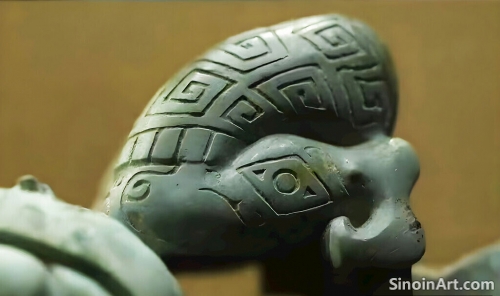 Bronze objects often displayed specific emblems and symbols associated with imperial authority, including dragons, phoenixes, and other mythical creatures, all carefully selected to underscore the divine power of the ruler. The use of these symbols helped to connect the earthly power structures with the power of the heavens. 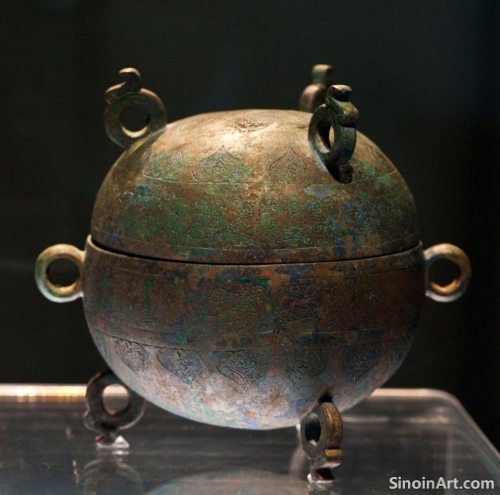 Bronze weapons and chariots, often richly decorated and finely crafted, were also potent symbols of military might and the power of the state, demonstrating the strength and authority of the rulers. The use of these objects to communicate and convey power was a central component of the ancient Chinese understanding of the political order. 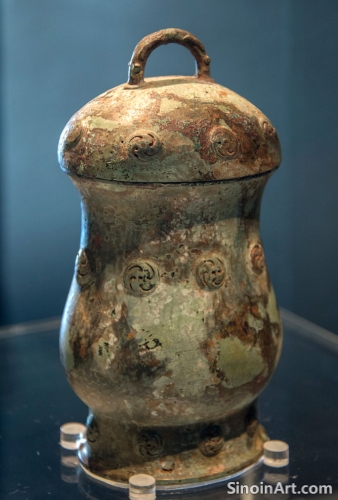 The precise craftsmanship and luxurious materials used in the production of bronze objects helped to convey the wealth, power, and artistic achievements of the ruling class, setting them apart from the rest of the population. The use of precious materials served to create a visual distinction between the rulers and the ruled. The production of these objects was an act of both artistic creation and also social and political messaging. The study of bronze ware and its association with power helps to highlight the importance of material culture in shaping social and political relationships, underscoring the interconnectedness of art, power, and the assertion of authority. The use of visual elements as a form of communication has always been a powerful element in human societies, and the use of bronze in ancient China is a perfect example of this. |
Tag : bronze power symbols, Chinese authority, imperial emblems, political power, social hierarchy
Related information
- Bronze Weights and Measures in Ancient China: Standardization and Trade
- The Preservation of Bronze Ware: The Impact of Environmental Factors and Storage Conditions
- Regional Styles of Bronze Ware: Exploring the Diversity of Ancient China
- Bronze Ware and Ancient Chinese Law: Authority, Justice, and Codification
- The Development of Bronze Mirrors in the Han Dynasty: New Styles and Social Significance
This article explores the use of bronze for weights and measures in ancient China, highlighting the importance of standardization, fair trade practices, and the role these artifacts played in facilitating commerce across the empire.
This article explores the impact of environmental factors and storage conditions on the preservation of Chinese bronze ware, highlighting the causes of corrosion, the role of humidity and pollutants, and the need for careful management of storage environments.
This article explores regional styles of bronze ware in ancient China, highlighting the distinct forms, designs, and techniques found in different areas, including the Central Plains, the Yangtze Valley, and the northern regions, revealing the diversity of ancient Chinese culture.
This article explores the use of bronze in ancient Chinese law, highlighting its role in codifying legal principles, disseminating decrees, and symbolizing judicial authority, revealing the interconnectedness of law, power, and material culture.
This article explores the development of bronze mirrors in the Han Dynasty, highlighting new styles, complex designs, their incorporation of cosmology, their role as status symbols, and the insights they offer into Han society.