Bronze Ware and the Development of Ancient Chinese Legal Codes: Recording Laws and Reinforcing Authority
|
While often associated with rituals and warfare, bronze also played a significant role in the development of ancient Chinese legal systems, used to create objects that displayed laws, regulations, and pronouncements, and to help legitimize the power of the ruling authority. The use of bronze for these purposes highlights the importance of both the written word and the need for tangible symbols of power and authority. 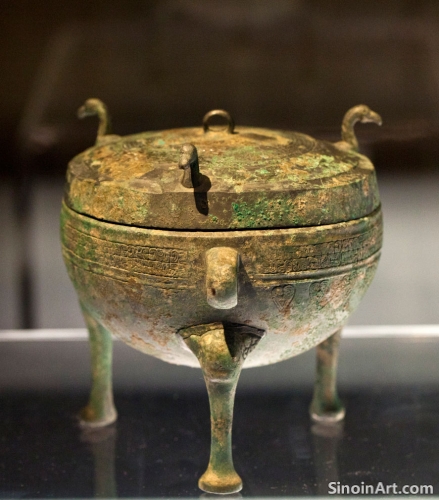 Bronze was used to create inscribed tablets, plaques, and vessels, which were then displayed in public spaces as a way of communicating the laws and policies of the government, creating readily visible displays of laws and pronouncements. The act of creating these public displays helped to enhance the power and authority of the ruling class. The presence of these written forms helped to create a sense of stability and continuity. 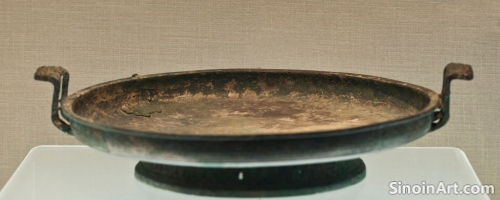 The durability and permanence of bronze was seen as an ideal way to record laws for future generations, emphasizing that these rules were not merely transient pronouncements but rather lasting principles of governance. The choice of bronze as a recording medium helped to legitimize the pronouncements they contained. The care and attention given to their design and layout further enhances their importance. 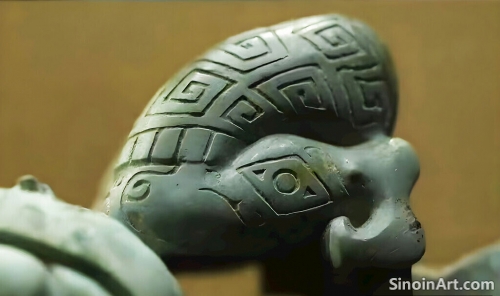 The inscriptions on these objects often included a combination of legal codes, moral precepts, and ideological principles, all designed to shape the behavior of the people and to maintain social order. The combination of law, morals, and social structure was a hallmark of ancient Chinese thought. The bronze objects served as a tangible manifestation of both political power and the overall culture of the era. The study of bronze ware and its connection to law reveals the close relationship between material culture, social control, and the development of legal systems in ancient China. The careful study of these artifacts helps to provide insight into the history of law and justice in ancient China. The use of these objects helped to codify and to legitimize the social and political order. |
Tag : bronze legal codes, ancient Chinese law, inscribed texts, legal authority, law preservation
Related information
- Preserving Chinese Bronze Ware: Challenges and Methods of Conservation
- Bronze Ware and Ancient Chinese Understandings of the Natural World: Animal Symbolism and Ecological Awareness
- Chinese Bronze Ware in Global Collections: A Transcultural Perspective
- The Production and Use of Bronze in Ancient Chinese Musical Instruments: Harmony and the Cosmos
- The Impact of Bronze Ware on Ancient Chinese Burial Customs: Ritual Objects and the Afterlife Journey
This article discusses the challenges and methods of conserving Chinese bronze ware, highlighting the vulnerability to corrosion, the specific techniques used for cleaning and preservation, and the overall importance of safeguarding these artifacts for the future.
This article explores how bronze ware reflects ancient Chinese understandings of the natural world, highlighting the detailed representations of animals, plants, and landscapes, and demonstrating the ancient awareness of the interconnectedness of humans and their environment.
This article explores the global distribution of Chinese bronze ware, highlighting its presence in museums and collections worldwide, the history of collecting, and the value of a transcultural perspective in understanding their significance.
This article explores the use of bronze in ancient Chinese musical instruments, highlighting the technical skill involved in their creation, the cosmological beliefs they represent, their role in ritual practices, and the interplay between music, spirituality, and the material world.
This article explores the impact of bronze ware on ancient Chinese burial customs, highlighting their role as grave goods, their connection to beliefs about the afterlife, and how they reflect the status and spiritual needs of the deceased.