The Production and Use of Bronze in Ancient Chinese Musical Instruments: Harmony and the Cosmos
|
Beyond the practical applications of bronze in tools and weapons, the use of this material in the creation of ancient Chinese musical instruments represents a remarkable convergence of technical skill, artistic innovation, and spiritual expression. Bronze instruments were not simply used to create music; they were also used as powerful tools for ritual and for connecting the world of humanity with the larger forces of the cosmos. The interplay between music and metalworking was a significant aspect of ancient Chinese life.  The precise casting and tuning of bronze bells, chimes, and drums allowed ancient musicians to create complex melodies, harmonies, and rhythms, which were often integrated into ritual and ceremonial events. The production of these complex instruments involved a high level of technical understanding and craftsmanship. The use of these instruments helped to enhance the experience of those in the ceremonies and rituals.  The tones and timbres produced by bronze instruments were often associated with specific cosmological principles, reflecting a belief in the connection between sound and the order of the universe. The sounds produced by these instruments were often believed to have a direct link to the celestial realms. 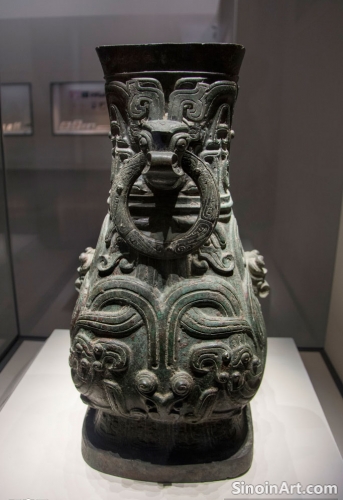 The use of bronze instruments in court and temple performances also helped to reinforce social hierarchies and to enhance the power and authority of rulers, highlighting the importance of music in the ancient Chinese worldview. The combination of music, ritual, and power was a key element in ancient Chinese social and political life. The study of bronze musical instruments offers valuable insights into the artistic skills, spiritual beliefs, and cultural practices of ancient China, demonstrating the interconnectedness of music, religion, and the power of bronze. The unique and distinctive sounds of the bronze instruments continue to resonate as powerful remnants of the ancient world. |
Tag : bronze musical instruments, Chinese music theory, ancient rituals, cosmos and sound, bianzhong
Related information
- The Evolution of Bronze Casting Techniques: From Early Molds to Complex Vessels
- Bronze Ware and Ancient Chinese Beliefs About Immortality: The Quest for Everlasting Life
- The Use of Bronze in Ancient Chinese Maritime Navigation: Compass Design and Directional Tools
- The Influence of Tang Dynasty Aesthetics on Later Bronze Ware Design
- Unveiling Ancient China: An Introduction to Chinese Bronze Ware
This article explores the evolution of bronze casting techniques in China, from simple molds to the piece-mold and lost-wax methods, highlighting the technological innovation and artistic mastery of ancient Chinese metalworkers.
This article explores the connection between bronze ware and ancient Chinese beliefs about immortality, highlighting how mirrors, vessels, and symbolic designs were used to ensure the well-being of the deceased, and to help with their passage to an eternal existence.
This article explores the use of bronze in ancient Chinese maritime navigation, highlighting its role in creating compasses, sighting devices, and other instruments, and demonstrating how these tools were used to facilitate long-distance sea travel.
This article explores the influence of Tang Dynasty aesthetics on later bronze ware design, highlighting the shift toward more refined forms, delicate decorations, naturalistic motifs, and how these changes reflected a broader change in cultural tastes.
This article provides an introduction to Chinese bronze ware, exploring their creation, functions, cultural significance, and their enduring legacy as symbols of ancient China’s artistry and technological achievement.