Bronze and the Development of Early Chinese Astronomy: Tools of Observation and Understanding
|
Beyond the decorative and ritualistic roles, bronze also played a crucial part in the development of ancient Chinese astronomy. The creation of bronze instruments, including armillary spheres and sundials, helped to facilitate the study of the cosmos, allowing for more accurate observation, calculation, and the development of a more comprehensive understanding of the universe. The use of bronze helped to unlock a more accurate understanding of the skies.  Bronze armillary spheres, which modeled the positions of celestial bodies, were essential for plotting the movements of the planets and stars. The use of bronze made for durable and precise instruments that could stand the test of time. These instruments were a testament to the technological capabilities of the period.  Bronze sundials were also used to measure time, playing an important role in the development of early calendars and timekeeping systems. These instruments helped with the daily organization of life in ancient China. The use of bronze in these objects helped to solidify its importance in both the artistic and scientific worlds. 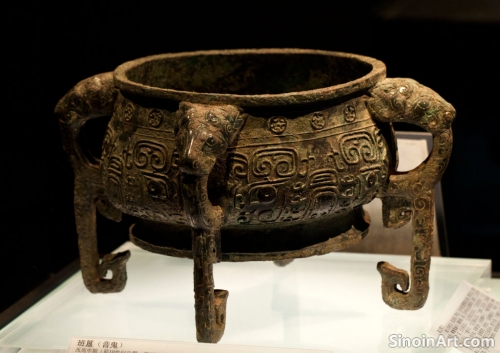 The careful design of these bronze astronomical tools, often featuring inscriptions and precise calibrations, reflects the integration of artistic skill and scientific knowledge. These instruments were not only highly functional, they were also aesthetically pleasing objects. The craftsmanship that went into these instruments shows a clear connection to traditional artistic practices. The study of bronze instruments from ancient China provides insights into the astronomical knowledge and worldview of the time, highlighting the intertwined nature of science, technology, and artistic expression. The use of bronze helps to create a more nuanced understanding of ancient Chinese life. |
Tag : bronze astronomy tools, Chinese instruments, ancient cosmology, sundials, armillary spheres
Related information
- Bronze Ware and the Development of Ancient Chinese Mathematics: Measurement and Calculation
- Bronze Ware and Trade Networks in Ancient China: Exchange and Interaction
- Bronze Ware and the Development of Ancient Chinese Technology: Innovation and Practical Applications
- The Evolution of Bronze Mirror Design: From Early Simplicity to Ornate Patterns and Narrative Scenes
- Bronze Vessels and Music Performance in Ancient China: A Multi-Sensory Experience
This article explores the use of bronze in ancient Chinese mathematics, highlighting its role in creating measuring instruments, illustrating mathematical principles, and revealing the connections between bronze, technology, and mathematical understanding.
This article explores the role of bronze ware in ancient Chinese trade networks, highlighting its importance as a trade commodity, its contribution to the exchange of cultural ideas, and its role in connecting different regions of China.
This article explores the role of bronze in the development of ancient Chinese technology, highlighting its use in agriculture, irrigation, and warfare, and demonstrating how the material enhanced practical and technical capabilities.
This article explores the evolution of bronze mirror design in ancient China, highlighting the shift from simple forms to more complex designs, including the use of intricate patterns, symbolic imagery, and narrative scenes, demonstrating the interplay between art, technology, and cultural change.
This article explores the combination of bronze vessels and music in ancient Chinese ritual performance, highlighting how these combined to create a multi-sensory experience that engaged both visual and auditory senses, and enhanced the power of ritualistic ceremonies.