A Historical Journey: The Origins of Gongbi Painting
|
The history of Gongbi painting is deeply intertwined with the development of Chinese art itself. Its roots can be traced back to the early dynasties, where the emphasis on precise representation was often used to capture the likeness of emperors, historical figures, and important events. Early forms of Gongbi painting can be seen in tomb paintings and murals, indicating its use in both secular and sacred contexts. The attention to detail and realistic depiction in these early works laid the foundation for the refinement of the art form. 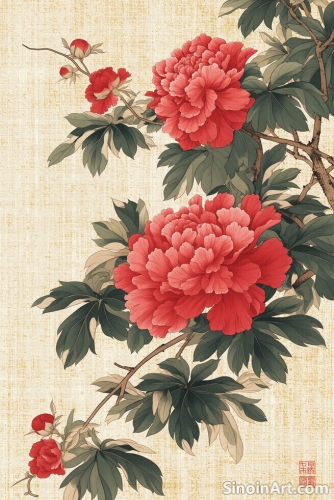 During the Tang Dynasty (618-907), Gongbi reached a significant milestone, evolving into a distinct artistic tradition. The emphasis on elaborate and decorative arts during this period encouraged the development of intricate and meticulously rendered paintings. Gongbi paintings from this era often depicted court life, historical narratives, and the beauty of nature, reflecting the prosperity and sophistication of the Tang court. This period also saw the emergence of influential artists whose works helped establish the core principles of Gongbi. 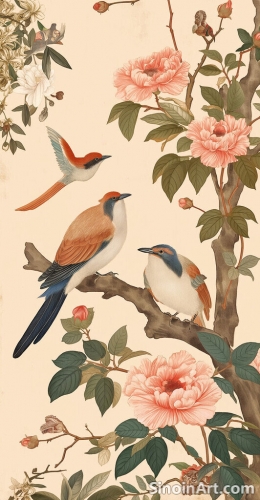 The Song Dynasty (960-1279) is often considered the golden age of Gongbi painting. Artists during this period achieved remarkable levels of technical proficiency and artistic expression. The themes of nature, especially birds and flowers, were rendered with astounding realism and sensitivity. Court painters refined the techniques, emphasizing accuracy and detail. This was also the period when detailed flower-and-bird paintings became an iconic subject, showcased in many palace and private collections.  Throughout the Ming (1368-1644) and Qing (1644-1912) Dynasties, Gongbi painting continued to flourish, albeit with some stylistic variations. While still emphasizing precise detail, artists in these periods incorporated new artistic influences, expanding the range of subjects and techniques. Landscape painting saw an increase in the precision and complexity, while the depiction of human figures became increasingly refined. The development of new pigment colors also contributed to the unique character of the Gongbi paintings from these later periods. The modern era has seen a renewed appreciation for Gongbi painting, with contemporary artists building upon and revitalizing the traditional techniques. The art form is experiencing a resurgence both in China and internationally. While traditional themes remain popular, contemporary artists are also exploring new subjects and innovative approaches. This continued evolution ensures the legacy of Gongbi painting will endure as a significant form of Chinese cultural heritage. |
Tag : History of Gongbi, Tang dynasty painting, Song dynasty painting, traditional Chinese art history, Chinese art timeline
Related information
- Gongbi and the Use of Calligraphy in Composition
- Gongbi Painting and the Four Gentlemen: Symbolism in Nature
- The Influence of Gongbi on Contemporary Art
- Gongbi Painting and the Concept of "Shanshui"
- Gongbi and the Depiction of Architecture
This article explores the integration of calligraphy into Gongbi painting, highlighting how it balances the composition, adds context, provides literary depth, and enhances the overall aesthetic and cultural significance of the artwork.
Explores the symbolism of the Four Gentlemen (plum blossom, orchid, bamboo, chrysanthemum) in Gongbi painting, highlighting their cultural significance and representation.
An examination of Gongbi painting's influence on contemporary art, highlighting the adaptation of its techniques, symbolism, and aesthetic principles.
This article explores the relationship between Gongbi painting and the concept of "Shanshui," highlighting the presence of core Shanshui principles, such as the balance of yin and yang, the detailed rendering of nature, and the integration of humans into the natural order within Gongbi landscapes.
This article explores the depiction of architecture in Gongbi painting, highlighting the meticulous detail, historical accuracy, use of perspective, and interplay of light and shadow, showcasing how this art form captures both the physical appearance and cultural significance of buildings.