Bronze Ware and Ancient Chinese Philosophy: Exploring the Connection Between Material Culture and Intellectual Thought
|
Beyond their practical use and symbolic power, bronze artifacts also served as a medium for conveying and exploring philosophical ideas in ancient China, often reflecting the values, principles, and underlying worldviews of Confucianism, Daoism, and other schools of thought. The blending of artistic creation and philosophical beliefs helped to create a unique form of cultural expression. The interplay between art and philosophy helped to shape both the intellectual and artistic traditions of the ancient world.  Confucianism, with its emphasis on ritual, social hierarchy, and moral order, is often reflected in the forms and designs of bronze vessels that were used in ancestral rites and state ceremonies. The design principles reflect the importance of order and harmony that was a key aspect of Confucian thought. The integration of ritual practice and philosophical principles was central to many areas of ancient Chinese life. 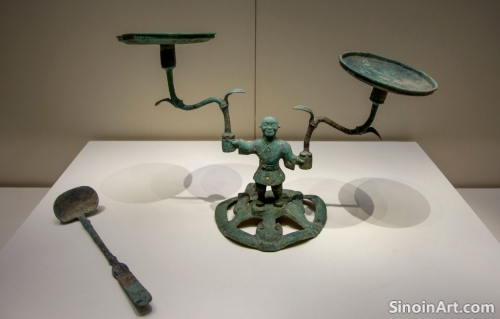 Daoist philosophy, with its focus on naturalness, spontaneity, and harmony with the cosmos, also influenced bronze production, resulting in objects that often emphasized flowing lines, simple forms, and organic motifs. The influence of Daoism led to a new visual vocabulary for artistic expression. The emphasis on nature and the natural world is a hallmark of Daoist thought. 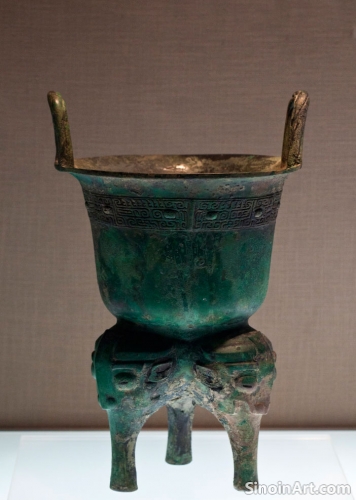 Legalism, with its emphasis on law, order, and the authority of the state, was often reflected in bronze inscriptions and the creation of instruments that were used to enforce legal practices. The combination of both the written word and the visual symbolism was a key element in the application of power. The interplay between law and art highlights the importance of both in ancient Chinese culture. The study of bronze ware through the lens of ancient Chinese philosophy helps to reveal the complex relationship between material culture, intellectual thought, and social organization. The bronze artifacts help to illuminate the thought and philosophical traditions of the time. The care with which these objects were created reflects the care and planning that were applied to the understanding of the world itself. |
Tag : bronze philosophy, Confucianism, Daoism, Legalism, Chinese thought
Related information
- Bronze Ware and the Representation of Authority: Imperial Symbols and Power
- The Role of Bronze in Ancient Chinese Funerary Practices: Preparing the Deceased for the Afterlife
- The Enduring Legacy of Bronze Ware: A Bridge Between Ancient and Modern China
- The Preservation of Bronze Ware: Balancing Scientific Methods with Artistic Understanding
- The Production and Use of Bronze in Ancient Chinese Musical Instruments: Harmony and the Cosmos
This article explores the representation of authority in Chinese bronze ware, highlighting the use of symbols, emblems, weapons, and other objects to demonstrate imperial and elite power, and the connections between material culture, political ideology, and the assertion of control.
This article explores the role of bronze in ancient Chinese funerary practices, highlighting the inclusion of ritual vessels, weapons, mirrors and other objects, and how these items reveal beliefs about the afterlife and the preparation of the deceased for their journey.
This article reflects on the enduring legacy of Chinese bronze ware, emphasizing its continuing influence on art and culture, its role as a bridge between ancient and modern China, and the importance of preserving these invaluable treasures for future generations.
This article explores the preservation of Chinese bronze ware, highlighting the balancing act between scientific analysis and artistic understanding, the need for specialized techniques and ethical considerations, and also the need to provide access and ensure their long-term care.
This article explores the use of bronze in ancient Chinese musical instruments, highlighting the technical skill involved in their creation, the cosmological beliefs they represent, their role in ritual practices, and the interplay between music, spirituality, and the material world.