The Influence of Taoism on Xieyi Painting
|
Taoism, with its emphasis on living in harmony with nature, has significantly influenced the development of Xieyi painting. The Taoist concept of the Tao (道), the underlying principle of the universe, is reflected in the ways that Xieyi artists capture the flow of life.  The Taoist principle of wu wei (無為), or "non-action," encourages artists to let their brushstrokes flow naturally, mirroring the natural movements of the world. The intention is to follow the flow of life, avoiding the pursuit of forced artistic effort, which is mirrored through the use of natural brushwork. 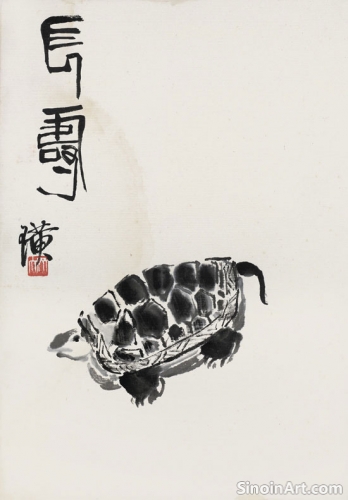 The Taoist emphasis on the interconnectedness of all things is reflected in the way Xieyi artists portray the relationship between different elements in their paintings. Nature is viewed as a unified whole, and individual elements are depicted in their relationship with the larger environment. This holistic approach to artwork mirrors Taoist ideals.  The appreciation for nature and its inherent beauty is also a key element in Taoism and Xieyi painting. Artists seek to capture the essence and spirit of natural forms, reflecting the Taoist belief that nature is a source of wisdom and inspiration. By embracing spontaneity, intuition, and a deep connection with nature, Xieyi artists create works that reflect the core principles of Taoism. The interplay between form and spirit is reflective of a deeply ingrained cultural and philosophical perspective. |
Tag : Taoism and Xieyi Painting, Xieyi and Daoism, Taoist Influence on Art, Naturalism in Chinese Painting, Ink Painting Philosophy
Related information
- The Legacy of Xieyi: From Tradition to Innovation
- The Significance of Composition in Xieyi
- The Concept of "Qing" in Xieyi Painting
- The Role of the Brush in Xieyi Painting
- The Future of Xieyi Painting
This article traces the legacy of Xieyi painting from its origins in the Song Dynasty to its continuous evolution through subsequent dynasties, exploring its transformation from a tradition to a vibrant contemporary practice.
Composition, including the strategic use of negative space, asymmetrical balance, and flowing lines, is vital in Xieyi painting, guiding the viewer's eye, creating a sense of harmony, and supporting the artist's intention, despite the art form's seemingly spontaneous nature.
"Qing" (feeling) is a fundamental concept in Xieyi painting, emphasizing the importance of artists imbuing their work with personal emotion and genuine expression, requiring sensitivity, observation, and technical skill to convey feelings through brushstrokes, composition, and connecting with viewers on a deeply human level.
The Chinese brush is essential to Xieyi painting, serving as an extension of the artist's hand and mind. Mastering brush types, grip, pressure, and stroke is crucial for creating the diverse range of expressive marks and textures characteristic of the art form.
The future of Xieyi painting is bright, with contemporary artists expanding its boundaries, exploring new mediums, embracing social themes, and sharing their work globally, while the art form's ability to connect emotionally ensures its continued vitality and relevance.