Xieyi Painting and the Use of "Contrasting Ink"
|
The term “Contrasting Ink,” or nóngdànmò (濃淡墨), refers to the strategic use of both dark and light ink in Xieyi painting to create a sense of depth, volume, texture, and atmosphere within a composition. The skillful application of contrasting ink values is essential to the artistic expression of the Xieyi technique. It is a way to make the artwork both dynamic and expressive.  The skillful combination of rich, dark ink and delicate, light washes allows the artist to create a sense of visual contrast and to define the forms within their paintings. The light and dark areas balance each other to create a dynamic and expressive overall composition. The strategic use of light and dark is central to the art form. 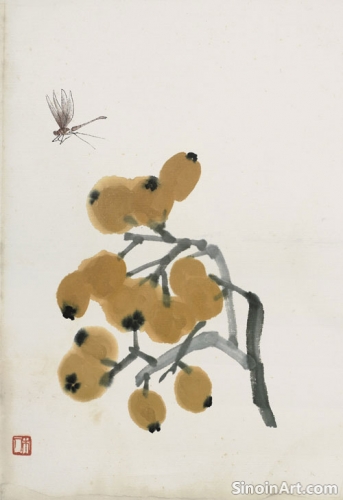 The use of dark ink can create a sense of boldness, strength, and immediacy, while light ink can be used to create a feeling of distance, depth, and softness. This application of ink creates a powerful contrast in the painting. The contrast serves to emphasize different areas, and it also serves to add a visual dynamism to the composition. 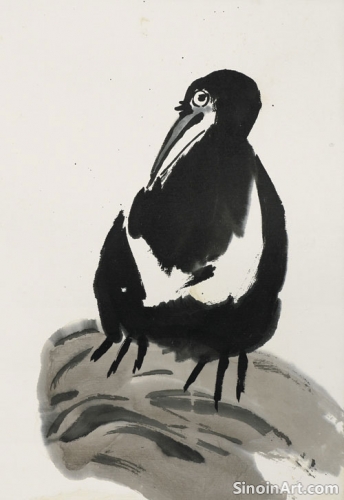 The controlled blending of dark and light inks, often through the technique of layered washes, allows the artist to create subtle gradations of tone, adding depth and complexity to their paintings. This careful blending is what gives the work its layered and highly textured visual quality. It shows a great skill at blending both ink and washes. Mastering the use of contrasting ink is crucial to achieving the full range of expressive potential within Xieyi painting, providing a way to capture the subtle nuances of light, shadow, and form. It is essential for any artist who wishes to be able to apply the full range of expressive possibilities within the Xieyi technique. |
Tag : Contrasting ink, Nongdanmo, light and dark, ink wash, Xieyi tones
Related information
- The Cultural Significance of Xieyi: Beyond Artistic Form
- The Concept of "Yi Bi Cheng Qiao" in Xieyi
- The Role of Calligraphy in Xieyi Painting
- The Concept of "Zhong Feng" in Xieyi Brushwork
- The Brushstrokes of Xieyi: Mastering Spontaneity
This article explores the cultural significance of Xieyi painting, highlighting its connection to Daoist philosophy, Chinese values, artistic heritage, and its role in preserving and expressing Chinese cultural identity.
"Yi Bi Cheng Qiao" (skill achieved in one brushstroke) is a key concept in Xieyi, emphasizing precision, confidence, and spontaneity in each brushstroke, aiming for efficiency, expressiveness, and a seemingly effortless display of skill, acquired through dedicated training and a deep connection with the art form.
Calligraphy forms the foundation of Xieyi painting, sharing similar brushwork techniques and aesthetic principles. The concept of "bone strength" and the integration of poetry, calligraphy, and painting are central to understanding the connection between these two forms.
"Zhong Feng" (central tip) is a core Xieyi technique involving holding the brush perpendicular to the paper to create strong, balanced lines with even width, conveying inner strength and control, serving as a foundation for advanced brushwork, and requiring a mastery of precision and consistent brush handling.
This article delves into the various brushstrokes and techniques used in Xieyi painting, emphasizing the importance of mastering spontaneity and ink control to convey the spirit of the subject.