The Concept of "Zhong Feng" in Xieyi Brushwork
|
The "Zhong Feng" (中鋒), often translated as "central tip" or "vertical brush," is a fundamental technique in Xieyi brushwork, referring to holding the brush directly perpendicular to the paper, with the tip of the brush moving along the center of the stroke. This creates lines that are strong, full, and have a rounded, balanced quality. This controlled brush position gives the strokes a feeling of power and purpose. 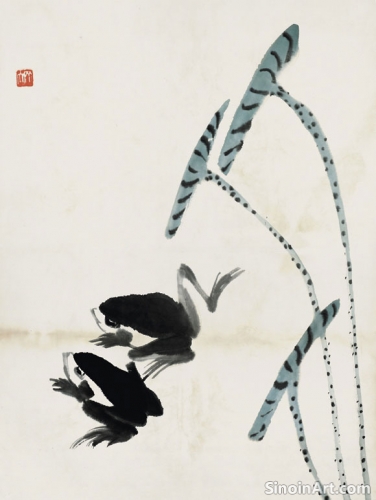 Using zhong feng allows the artist to create lines that are even in width and consistent in tone, requiring a steady hand and a deep understanding of brush control. It requires a precise and practiced hand. Mastering this technique allows the artist to create both smooth lines and broader textures.  This technique is often used to create the foundational lines in Xieyi painting, outlining forms and defining structures, creating a strong and solid base for more expressive brushstrokes. The initial lines must be powerful and full, to provide a strong framework for the rest of the artwork. It offers a foundation for future creative expression. 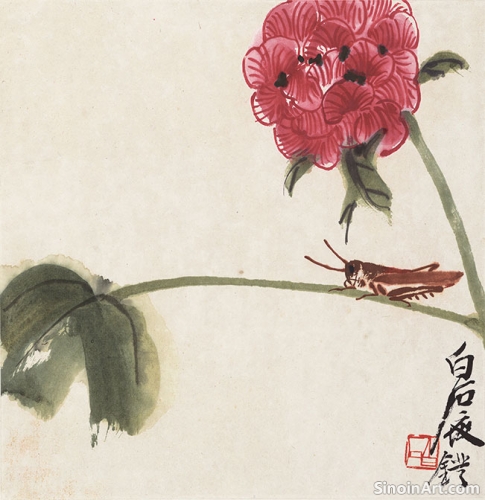 The "central tip" is also a means of conveying the artist's inner strength, confidence, and control. The feeling of power and strength of line is a highly valued quality in the Xieyi tradition. This power should be applied with intention and clear creative purpose. Mastering the zhong feng technique is an essential step for any aspiring Xieyi painter, providing a foundation for more advanced brushwork and a deep understanding of the art form's principles. It is an essential technique for creating brushstrokes that have both power and beauty. |
Tag : vertical brush, central tip, brush control, Xieyi technique
Related information
- The Cultural Significance of Xieyi: Beyond Artistic Form
- Xieyi Painting and the Concept of 'Yi'
- Xieyi Painting and the Depiction of Bamboo
- Ink Wash Techniques in Xieyi: Shades of Meaning
- Xieyi Painting as a Form of Personal Expression
This article explores the cultural significance of Xieyi painting, highlighting its connection to Daoist philosophy, Chinese values, artistic heritage, and its role in preserving and expressing Chinese cultural identity.
'Yi' is a central concept in Xieyi painting, referring to the inner intent, meaning, and spirit that the artist aims to convey, emphasizing intuitive expression, suggestive imagery, and the viewer's active participation in interpreting the artwork.
Bamboo is a popular subject in Xieyi painting, valued for its elegant form, resilience, and rich symbolic meaning, with artists using bold, fluid brushstrokes and calligraphic lines to capture its essence, its vital energy, and to express core values of integrity, resilience, and a meditative connection to nature.
Ink wash, or shuimo (水墨), is a fundamental technique in Xieyi painting. It involves the skillful application of various shades of ink, diluted with water, to create depth, texture, and atmosphere. Mastery of ink wash is critical for achieving the desired expressive effects.
Xieyi painting is a deeply personal form of expression, allowing artists to share their inner world, interpret their subject matter freely, and create unique artworks that reflect their individual vision, emotions, and experiences, making it a vehicle for both artistic expression and self-discovery.